
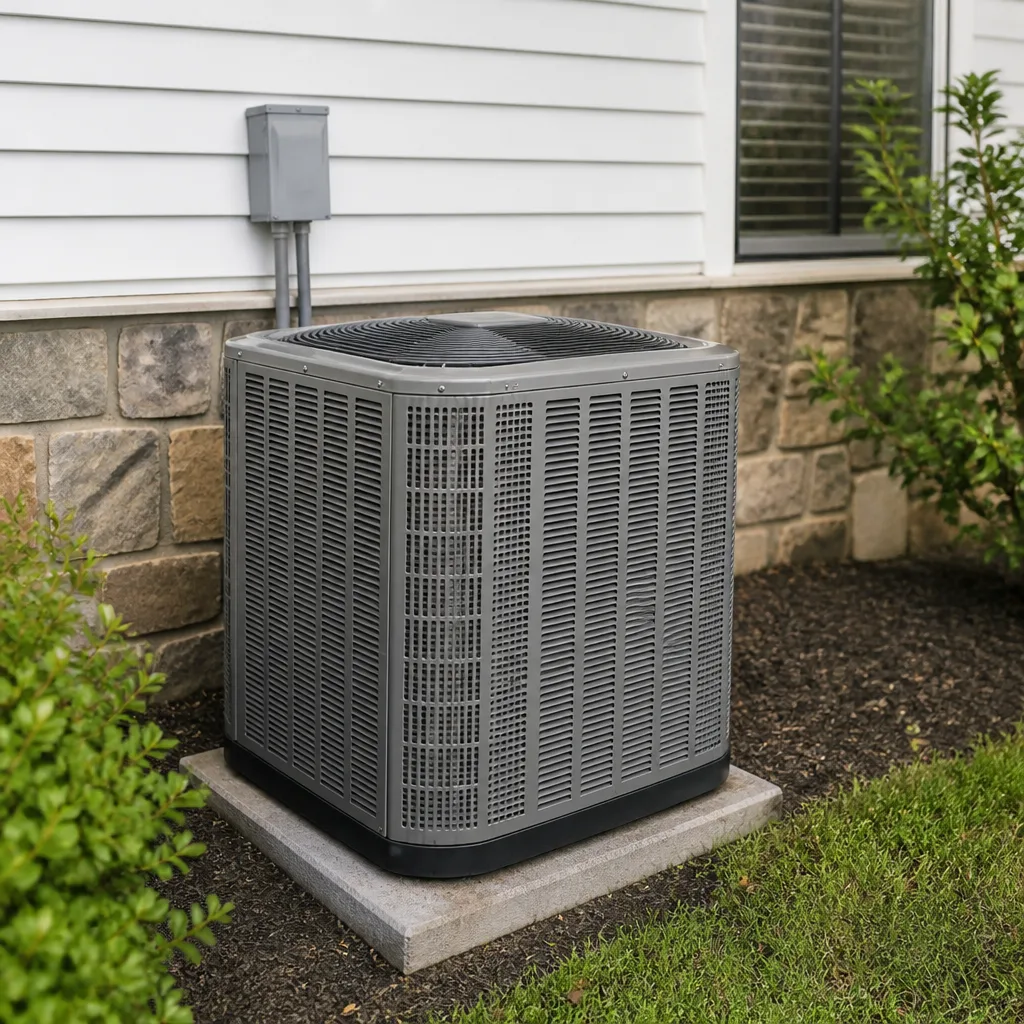
 AC repair
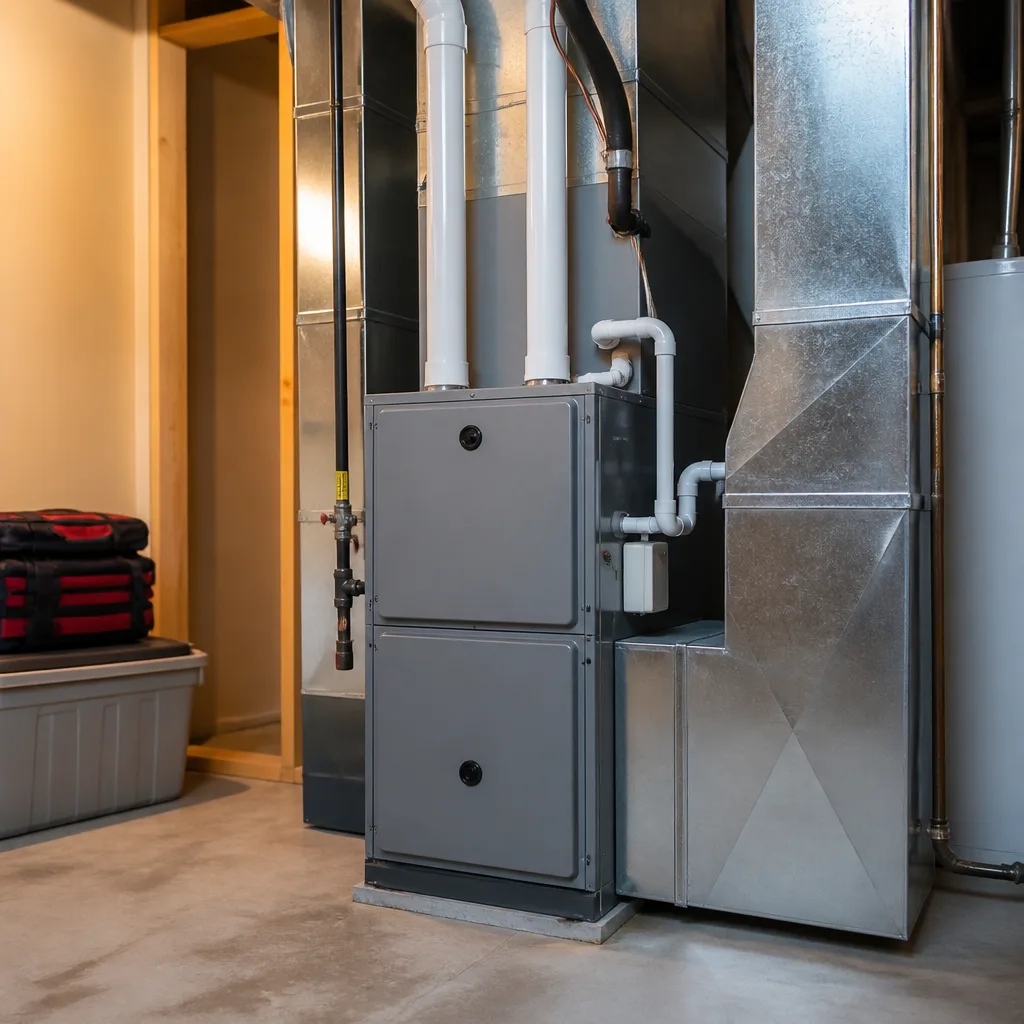 Furnace & heating
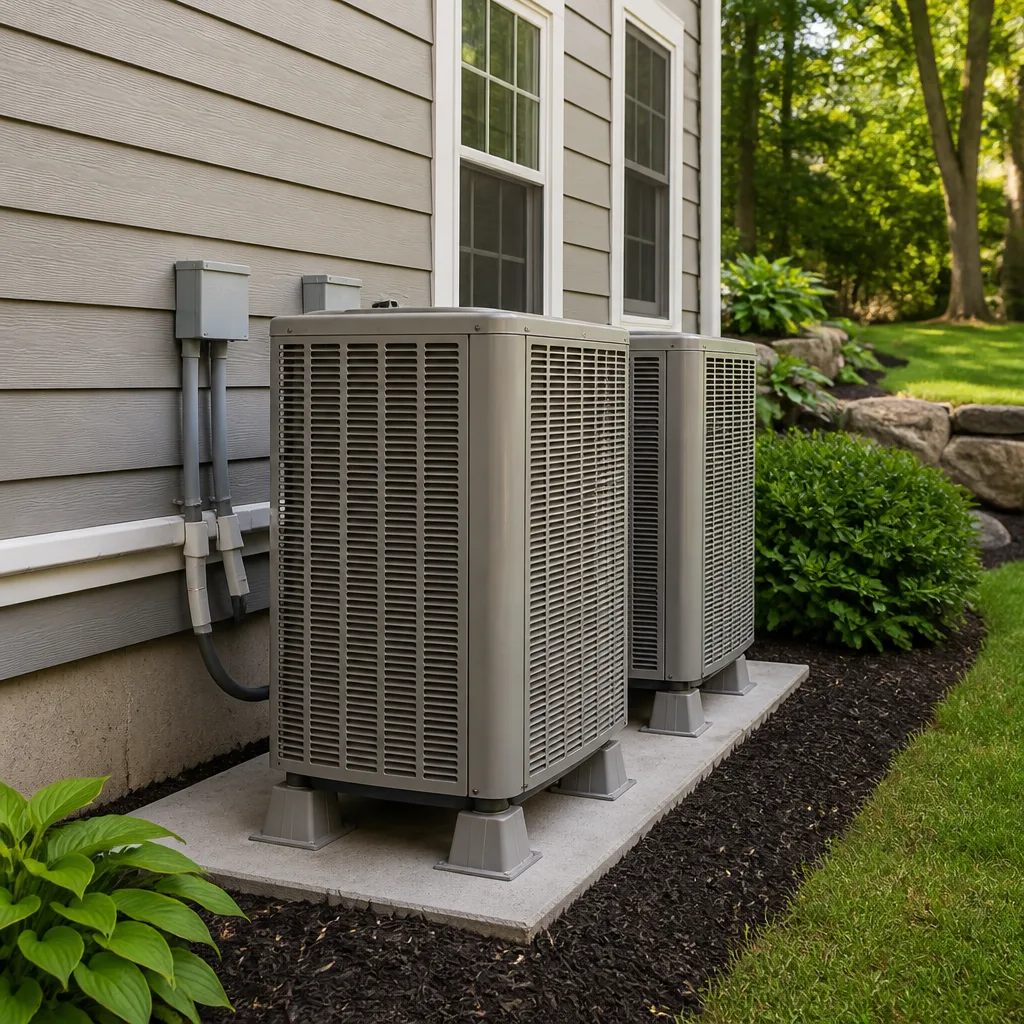 Heat pumps
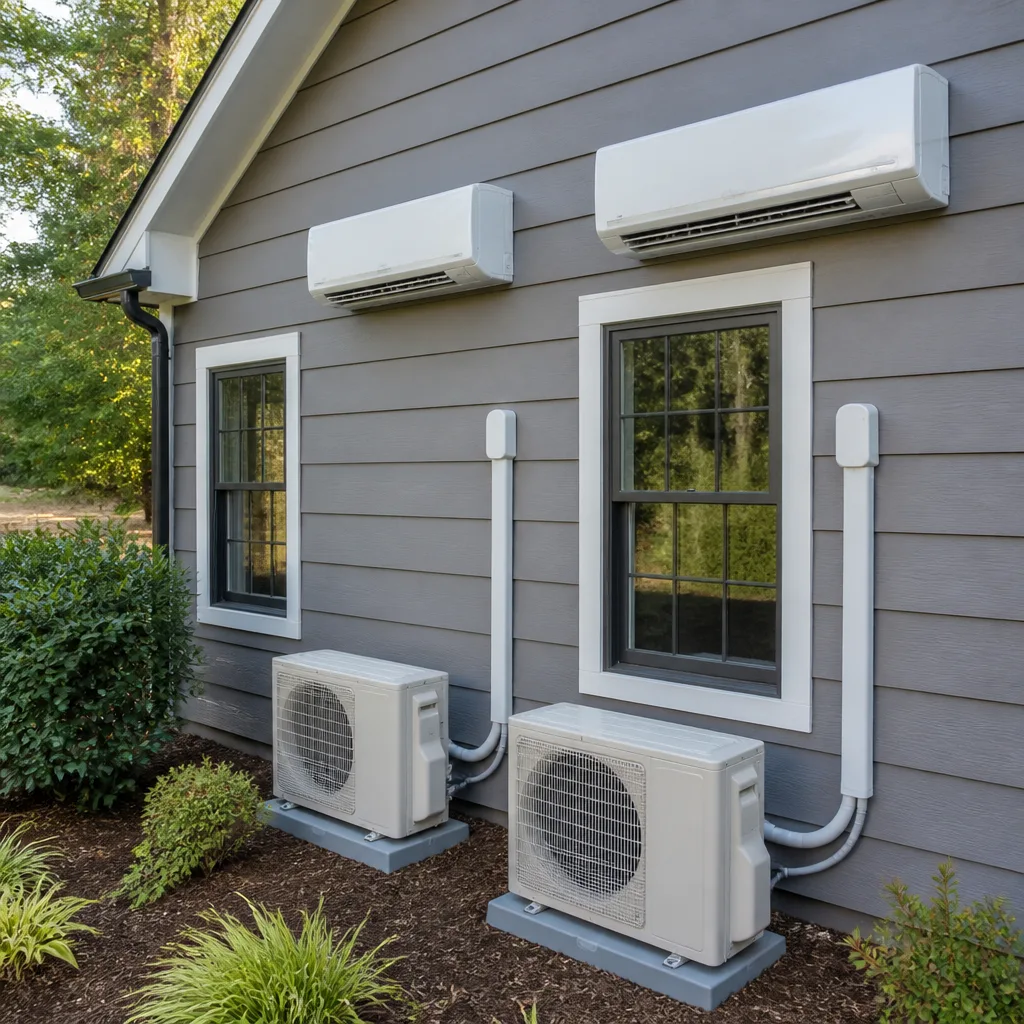 Ductless mini splits
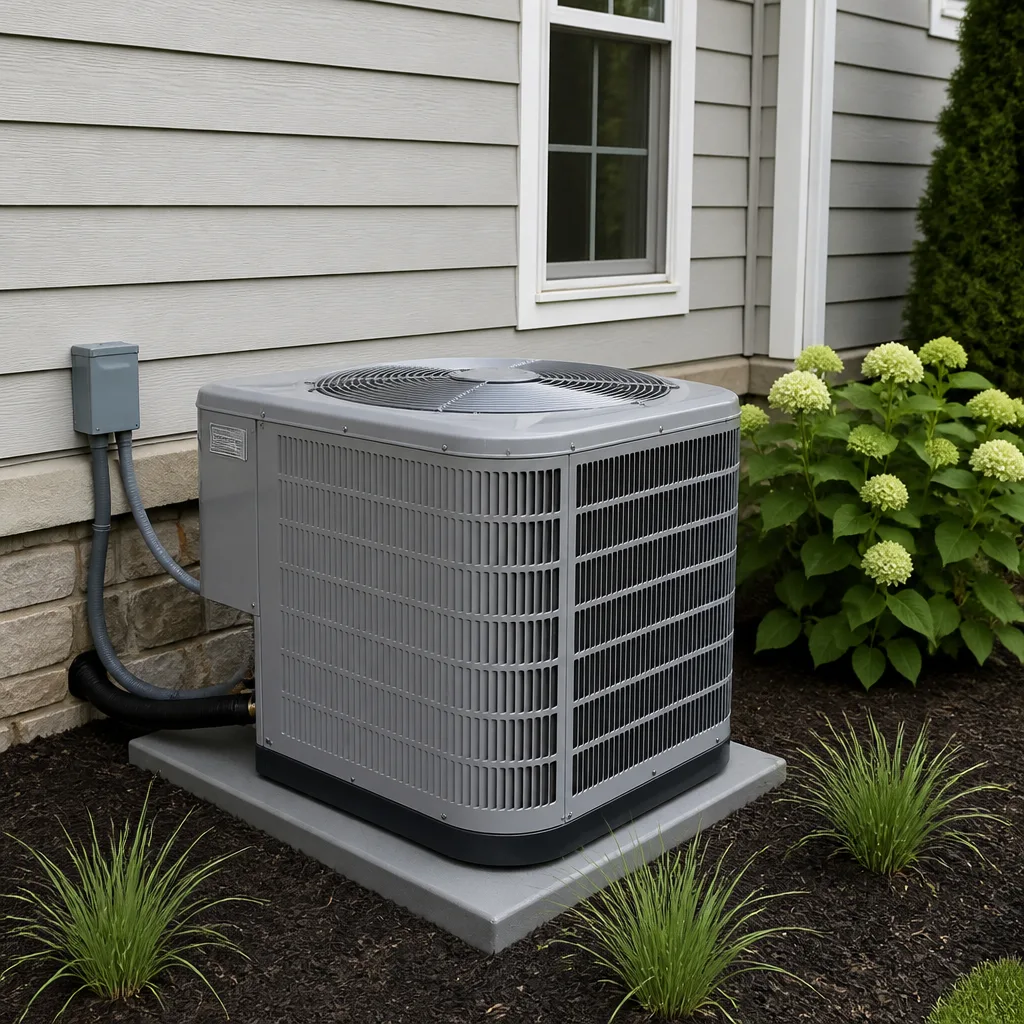 Carrier
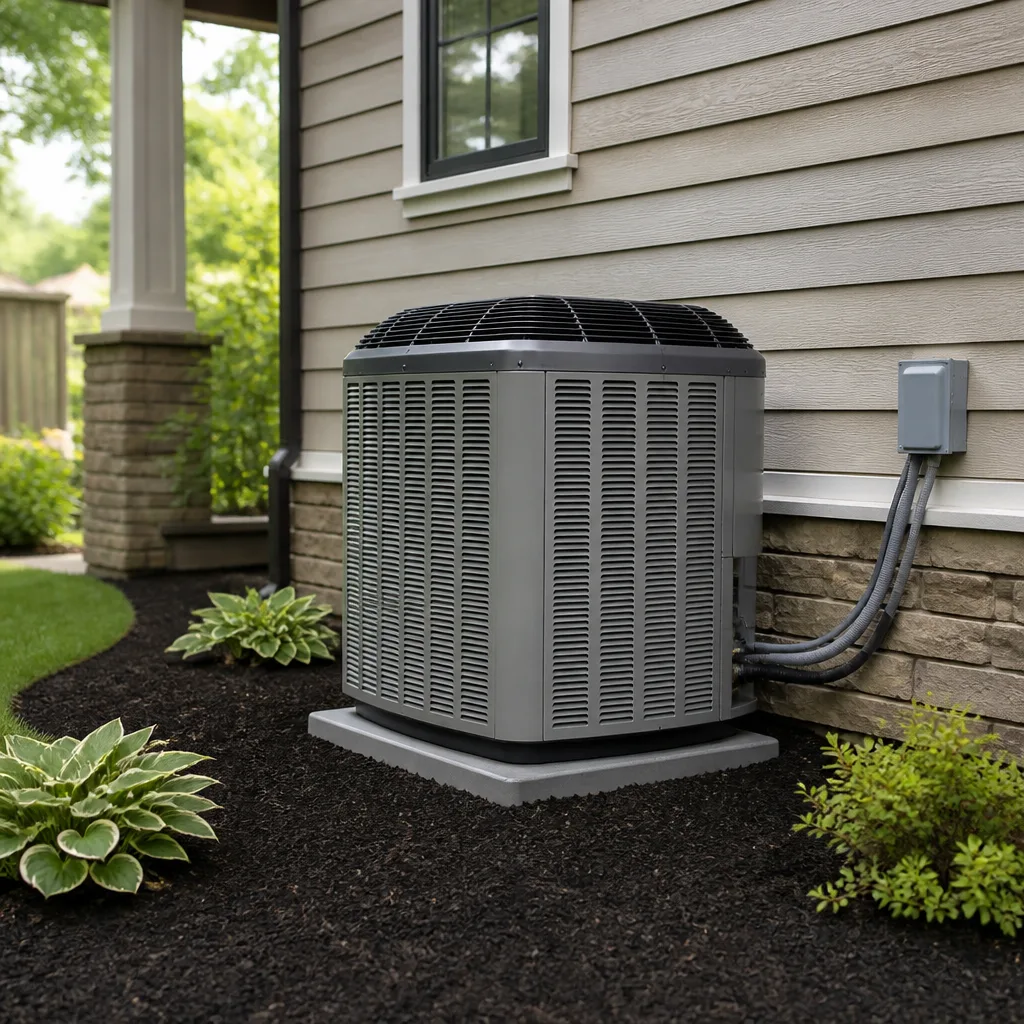 Trane
Trane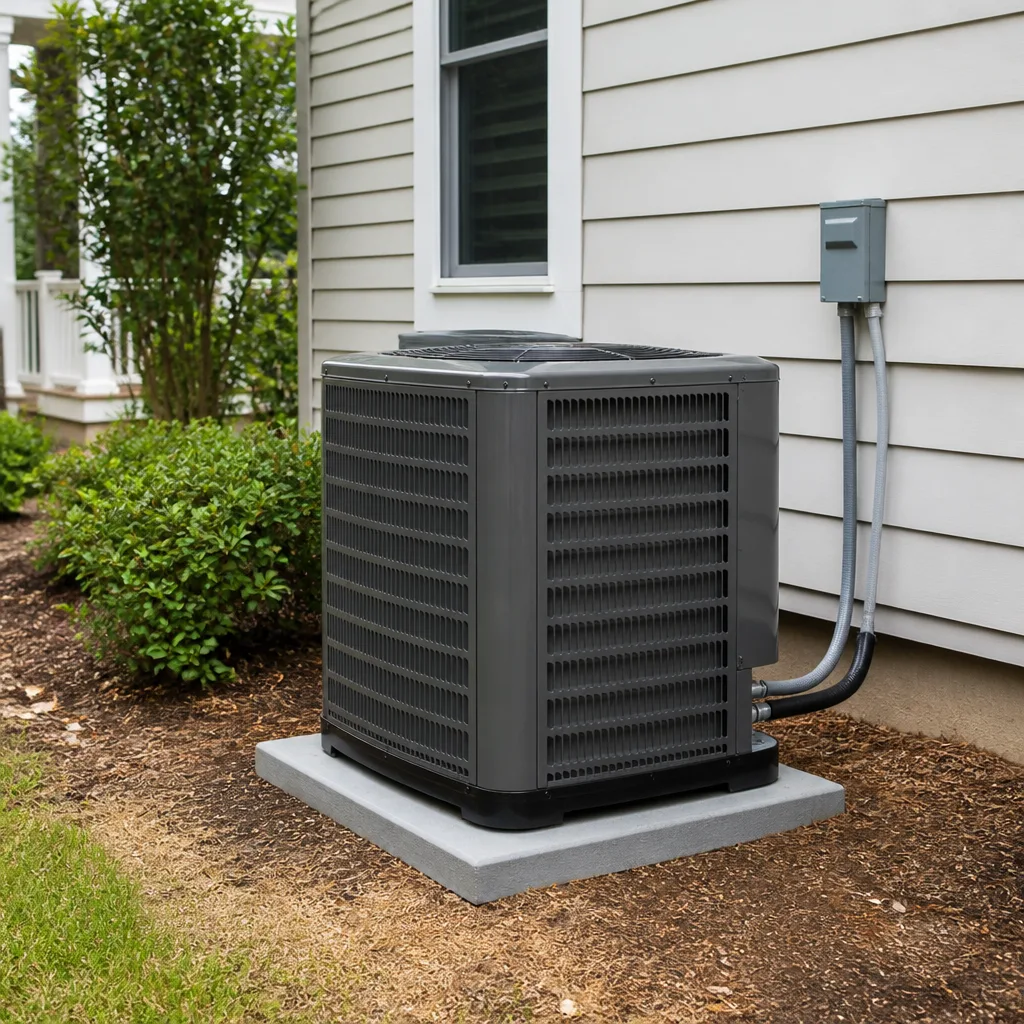 Goodman
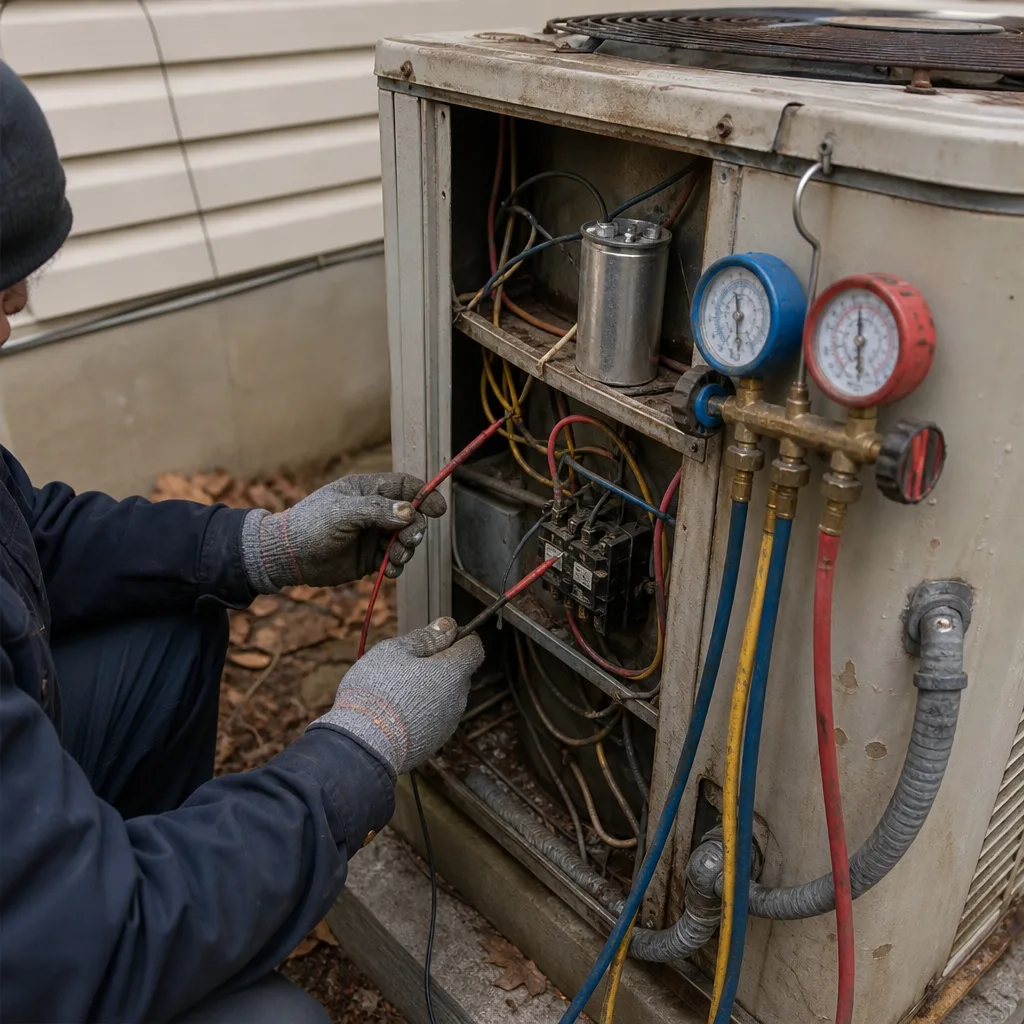
Seasonal tune-up and full diagnostic on your Carrier, Trane, or Goodman system - readings shown to you before any repair is proposed
Diagnosis first, numbers second - you approve the repair price before a single part goes in.
Get your free estimateRheem Ductwork Repair: The New York Owner’s Guide
We stock and install Rheem-compatible ductwork repair components throughout New York, with most ductwork repairs running $175 – $765 parts and labor included. We keep common Rheem duct fittings, collars, takeoffs, and transition pieces on our trucks, so a lot of New York apartments and homes get fixed the same day we arrive. The way most owners discover a ductwork problem is gradual: one room stops holding temperature, the system runs longer than it used to, or a musty smell starts coming through the vents when the AC kicks on in July.
The ductwork is the delivery system for every dollar your Rheem unit spends heating or cooling. When a joint separates, a collar pulls loose, or a section gets crushed in a tight New York chase, the air you paid to condition ends up in a wall cavity or a crawl space instead of your living room. Victor Mancini and our crew have been tracing these problems in New York homes long enough to know that the fix is rarely as dramatic as people expect. It’s usually a specific fitting, a specific run, a specific connection that failed. And once you find it, you’re most of the way to solving the problem.
Which Rheem Models This Applies To
Ductwork is not model-specific the way a control board or an igniter is, but Rheem systems do have some quirks worth knowing about. Rheem’s current residential lineup spans the Classic, Classic Plus, Prestige, and Endeavor series, along with Rheem’s packaged units and air handlers. The ductwork connects to the supply plenum and return drop on any of these, and that connection is where most failures start. If you look at the data plate on your air handler or furnace, you’ll see a model number that starts with something like R96V, R92T, R802V, or RH1T for Rheem’s newer stuff. Older units still common in New York carry RGD, RGP, or RBHC prefixes. The model number tells us the tonnage and the cabinet width, which tells us what size plenum connection you need. Guessing here is how you end up with duct tape over a gap that whistles.
On the parts side, Rheem uses standard galvanized duct fittings: 26-gauge for most residential runs, occasionally 24-gauge on larger commercial-style trunks in bigger New York buildings. OEM Rheem-branded duct parts exist but they are essentially the same galvanized stock you get from a quality sheet metal supplier. We do not bother upcharging for a Rheem label on a collar. What matters is gauge, dimension, and whether the joint is sealed with mastic or just foil tape. In New York, where summers are humid and winters are dry, unsealed duct joints pull dirty air from wall cavities and attics year-round. A proper seal matters more than a brand stamp.
Styles & brands we work with
Signs Your Rheem Ductwork Repair Is Failing
- One room won’t hold temperature while others are fine. This is the classic disconnected or collapsed branch line. Room X is 15 degrees off from Room Y because Room X’s duct is no longer delivering air to it. Follow the noise or the temperature, and you’ll usually find the break.
- Airflow at the register feels weak even with a new filter. A crushed flex run or a separated takeoff bleeds air before it reaches the grille. The blower is doing its job. The ductwork is not.
- A dusty, musty, or mouse-smelling odor when the system runs. Unsealed returns in basements, crawl spaces, or wall chases pull whatever air is in those spaces into your Rheem system. In New York prewar buildings, that air can be a century old.
- Whistling, flapping, or rattling from the walls or ceiling when the blower ramps up. A loose damper, a separated joint, or torn outer liner on flex duct makes noise. It’s your ductwork telling you something physical has changed.
- Your energy bill climbed without a change in usage. Leaky ducts mean your Rheem unit runs longer to hit the thermostat. On a per-dollar basis, duct leaks are some of the most expensive problems in a New York HVAC system, because you pay to condition air you never receive.
See the difference
 Before
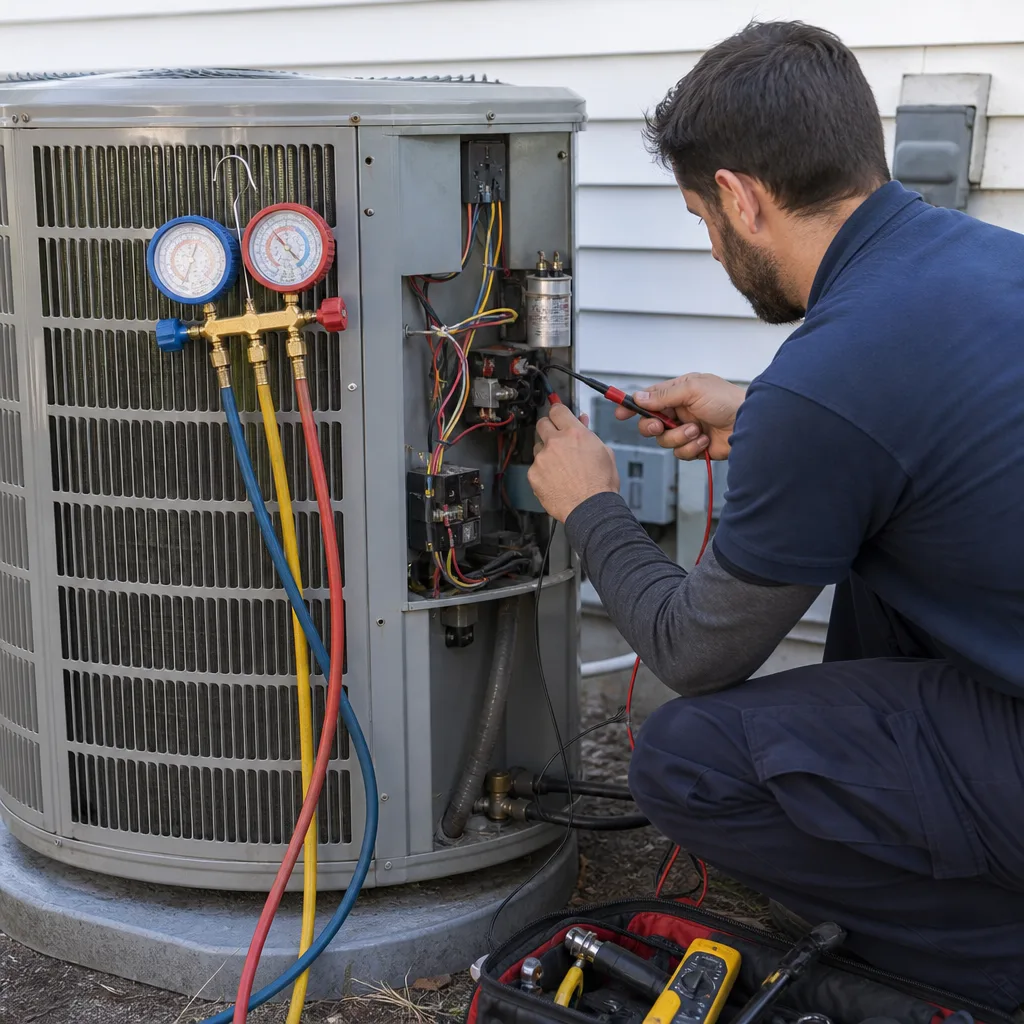 After
After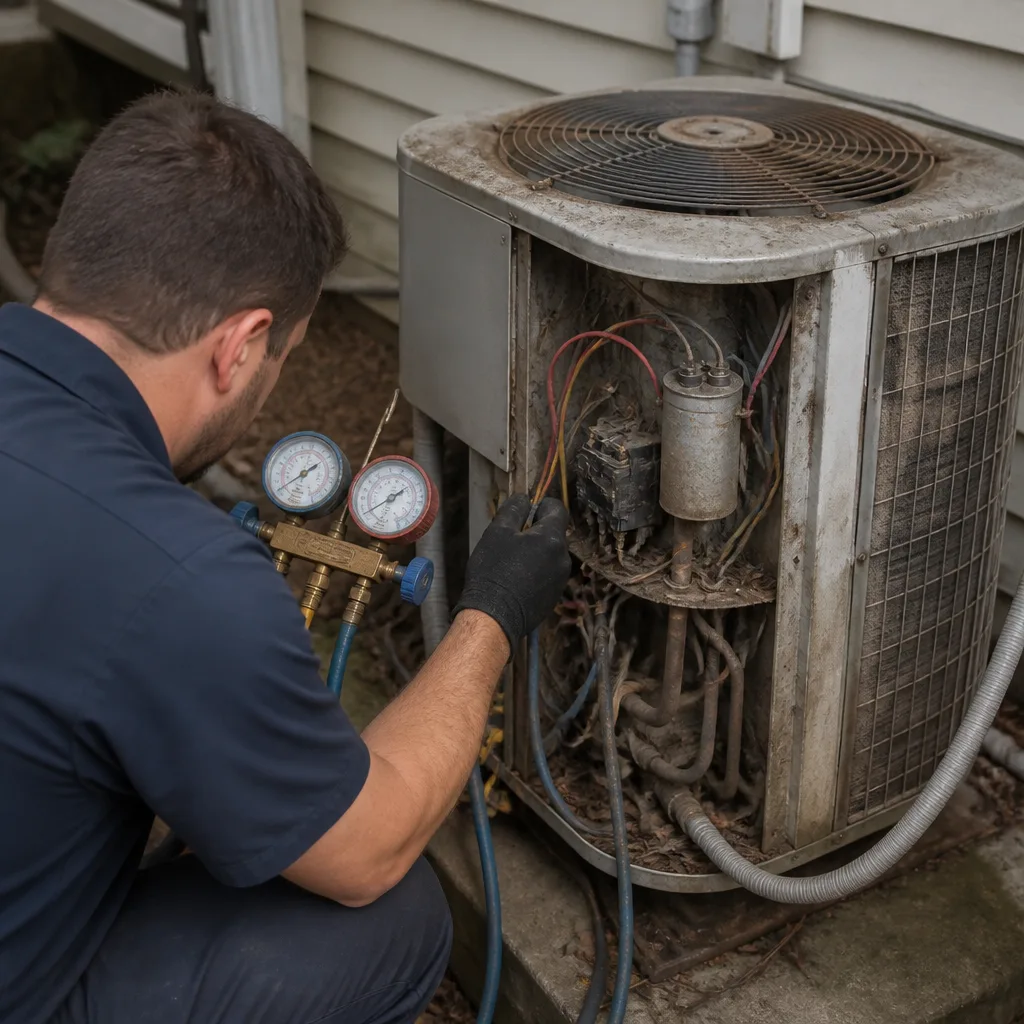 Before
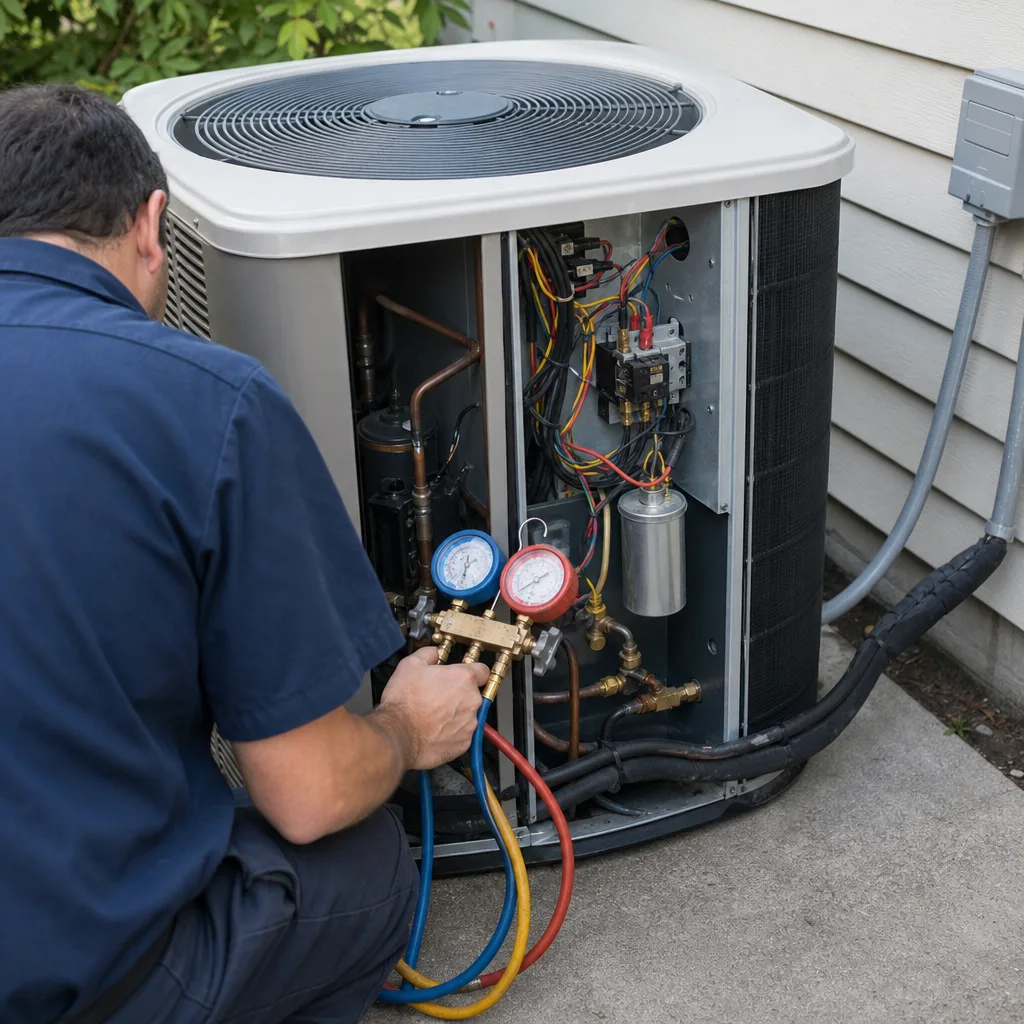 After
After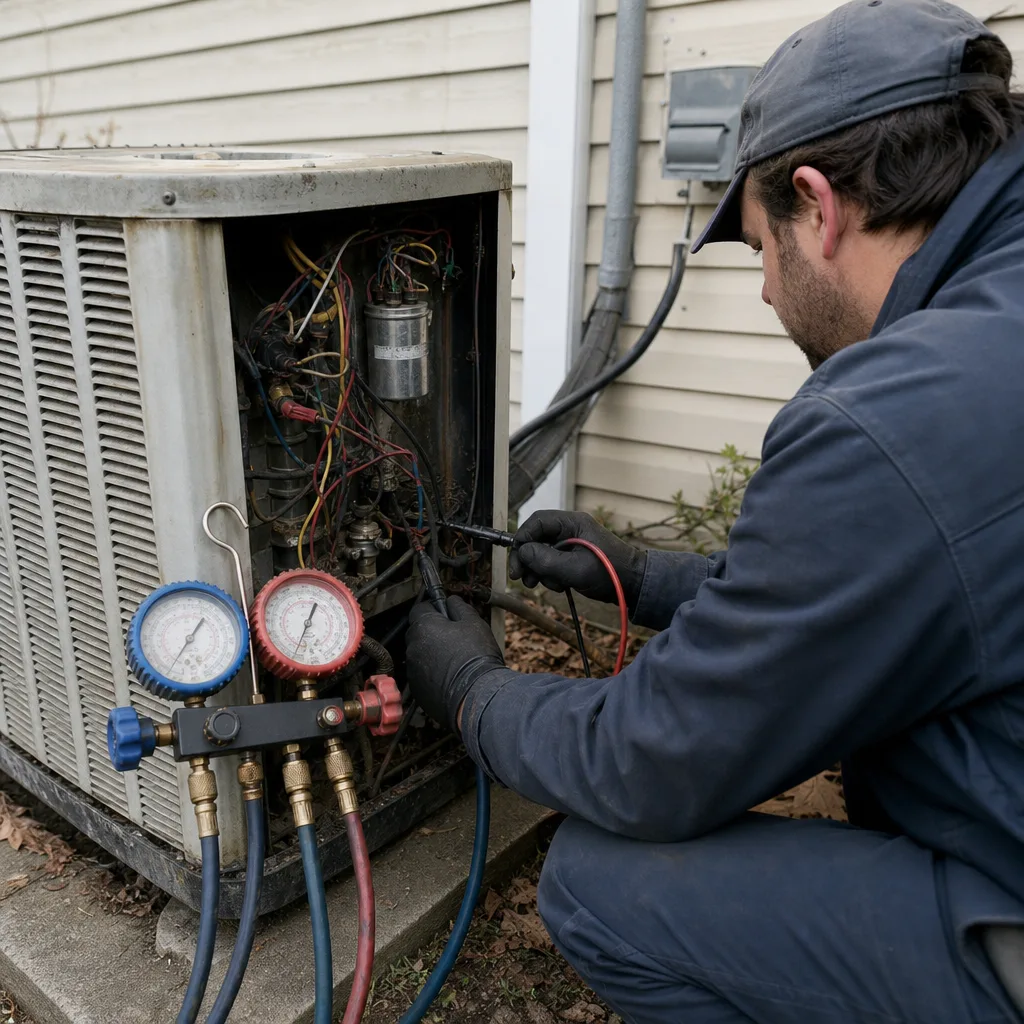 Before
 After
AfterReplacement Cost & What’s Included
In New York, Rheem ductwork repair ranges from $175 for a simple branch-line reconnection or small flex replacement up to $765 for multi-joint resections, damper replacements, or return-side sealing work. What pushes the number higher is access. A duct buried above a lath-and-plaster ceiling in a prewar building costs more to reach than a run in an open basement. Material itself is rarely the expensive part. Time and access are.
Every quote we write includes the part, the labor, the sealant (mastic, not tape, wherever the joint allows), and the cleanup. The price is handed to you in writing before a single tool comes out, and it does not change at the door. This is the Kingswell Way, and it applies on every Rheem ductwork job we run in New York. The repair itself is covered by our 365-Day Done Right Promise: if the same repair fails within a full year, we come back and make it right at no charge. That’s in writing, not just said.
DIY or Call Us?
Let’s be fair: if you can see a disconnected round pipe in an open basement, and you are comfortable reaching it safely, reconnecting it with a proper collar and a few sheet metal screws is not a risky job. Seal the outside of the joint with mastic, not duct tape. Duct tape dries out and fails. Mastic stays flexible and actually seals. That’s the one piece of advice that saves most DIY attempts.
But the ductwork you cannot see is a different matter. In New York, that means runs above drywall ceilings, inside fire-rated chases, or through tight attic spaces in prewar homes. Working above a ceiling without knowing what’s up there is how you put a foot through old plaster or cut a line you shouldn’t. If the problem is hidden, if the access is tight, or if there’s any chance of asbestos-containing insulation on those older ducts (common in New York buildings from before 1980), call us at (934) 465-5501. We’ll trace it, price it in writing, and then we’ll fix it. That’s the whole job.
FAQs
Galvanized metal ductwork can last 50 to 70 years if it stays dry and sealed. Flex duct has a shorter life, typically 15 to 25 years, and New York humidity plus the freeze-thaw cycle in uninsulated spaces shortens that. The weak points are always the connections: collars, takeoffs, and transitions fail long before the main runs do.
In most New York homes, yes. We repair far more ductwork than we replace. If the metal is solid and the failure is at a joint, a seam, or a short section of flex, a targeted repair is the right call and costs a fraction of a full replacement. Replacement only makes sense when a run is crushed, rusted through, or so undersized it never worked properly from the start.
A typical single-joint repair or flex-run replacement takes 1 to 2 hours once we are on site. Access-heavy work, like cutting into a ceiling chase or working in a cramped New York attic, can push that to a half day. We always give you a firm arrival window when you book, and someone answers the phone 24/7 if you need to reach us.
We carry common collars, takeoffs, dampers, flex connectors, and transition pieces sized for Rheem and the other major brands we service, including Carrier, Trane, and Lennox. For unusual fittings or hard-pipe sections that need to be custom fabricated, we measure on site and return with the exact piece, usually within one business day.
Call us at (934) 465-5501 for a free estimate on Rheem ductwork repair in New York. Tell me what it is doing, and I will tell you what it needs. No guesswork, no surprises.
Written by Victor Mancini, Owner, Cold Harbour Heating and Air New York at Cold Harbour Heating and Air New York, serving New York and nearby areas.