
 Furnace & heating
 AC repair
 Heat pumps
 Ductless mini splits
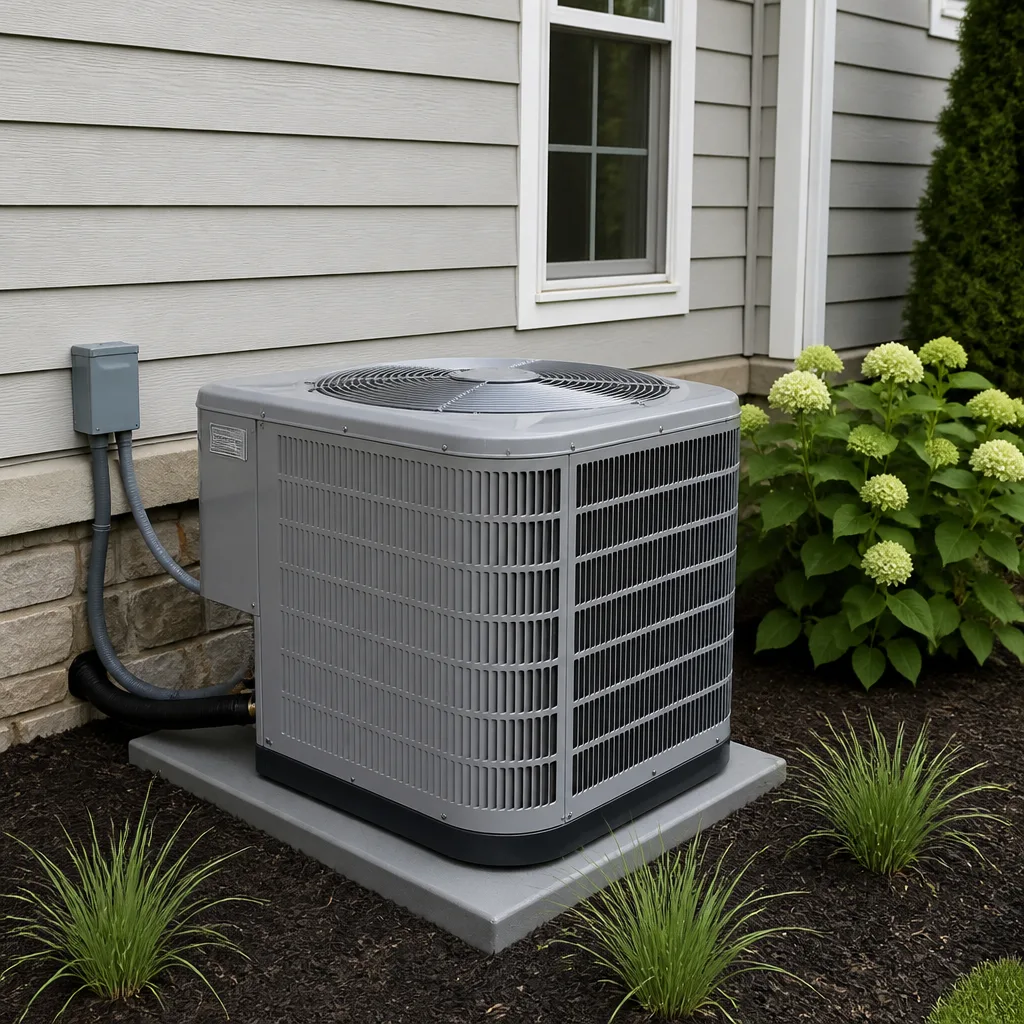 Carrier
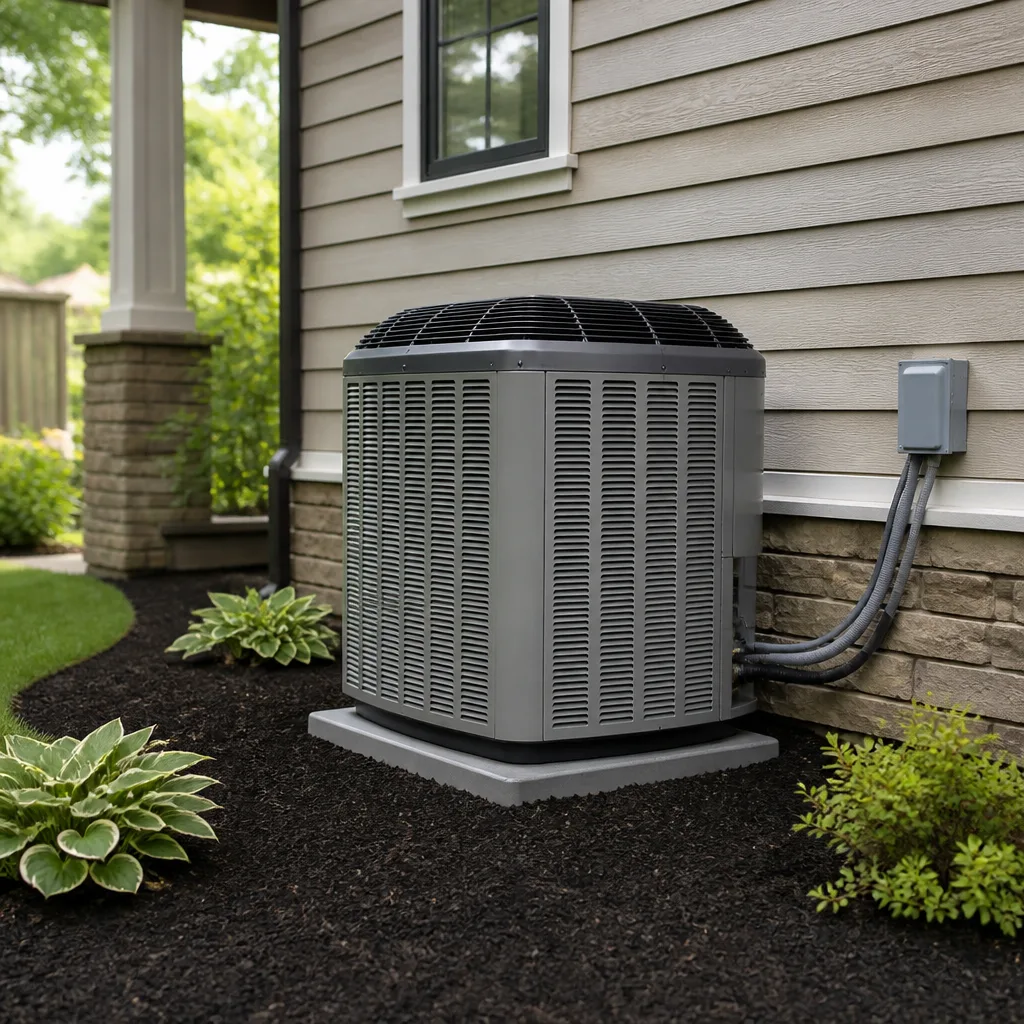 Trane
Trane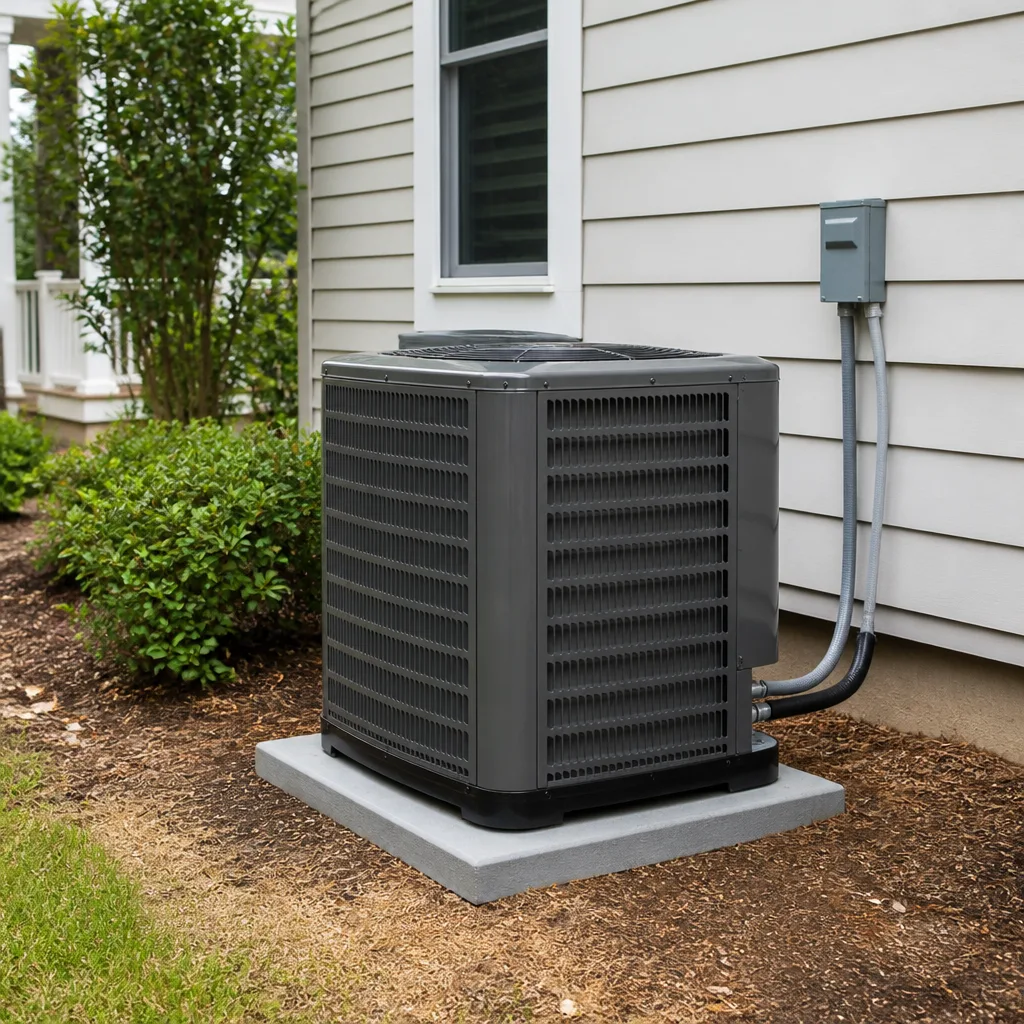 Goodman
Seasonal tune-up and full diagnostic on your Carrier, Trane, or Goodman system - readings shown to you before any repair is proposed
Diagnosis first, numbers second - you approve the repair price before a single part goes in.
Get your free estimateDaikin Capacitor Replacement: The New York Owner’s Guide
If your Daikin condenser hums but the fan won’t spin, or the compressor clicks and shuts off, a failed capacitor is the likely culprit. We stock Daikin-compatible run and start capacitors on our trucks and typically install a replacement in New York for $175 – $325, parts and labor included, often the same day you call. Most homeowners discover the problem on the first hot afternoon of the season, when the outdoor unit strains to start and the breaker trips, or when the system runs but blows warm air because the compressor never engaged.
Which Daikin Models This Applies To
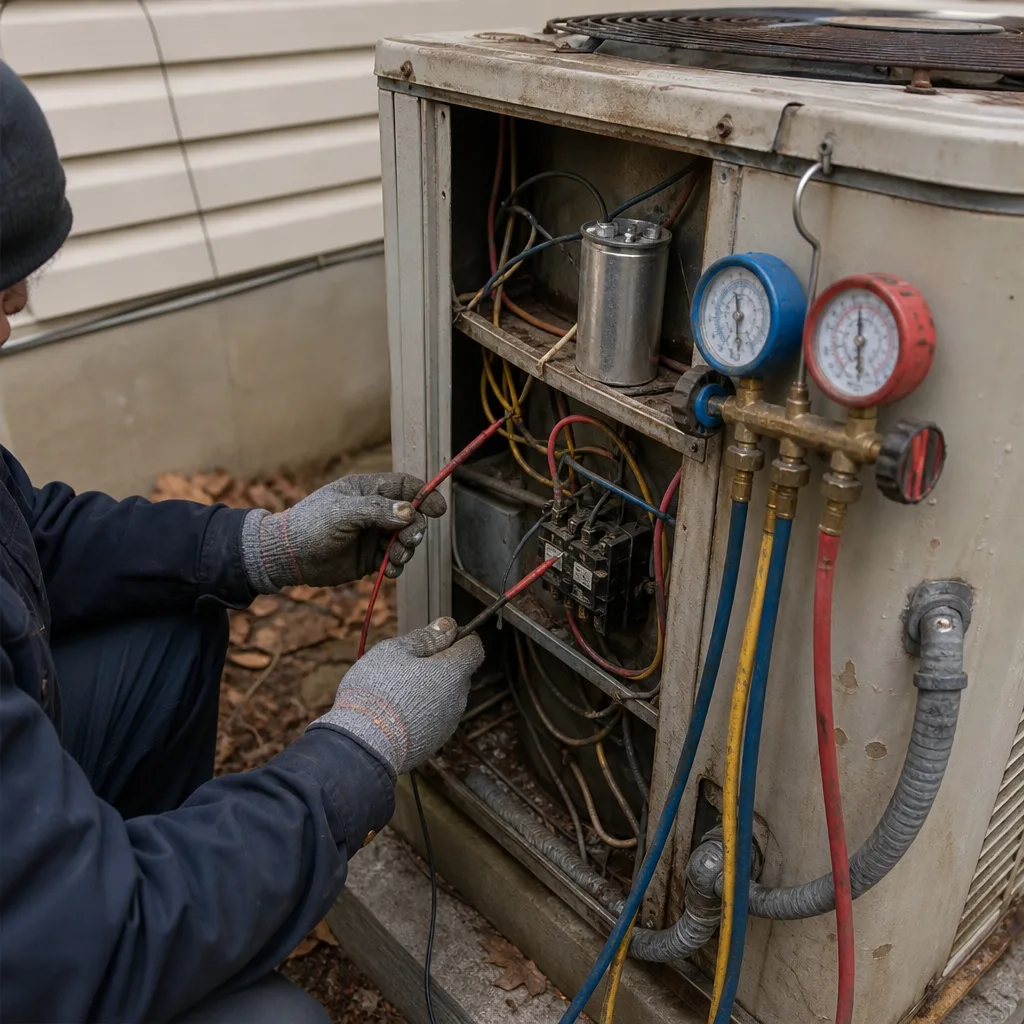
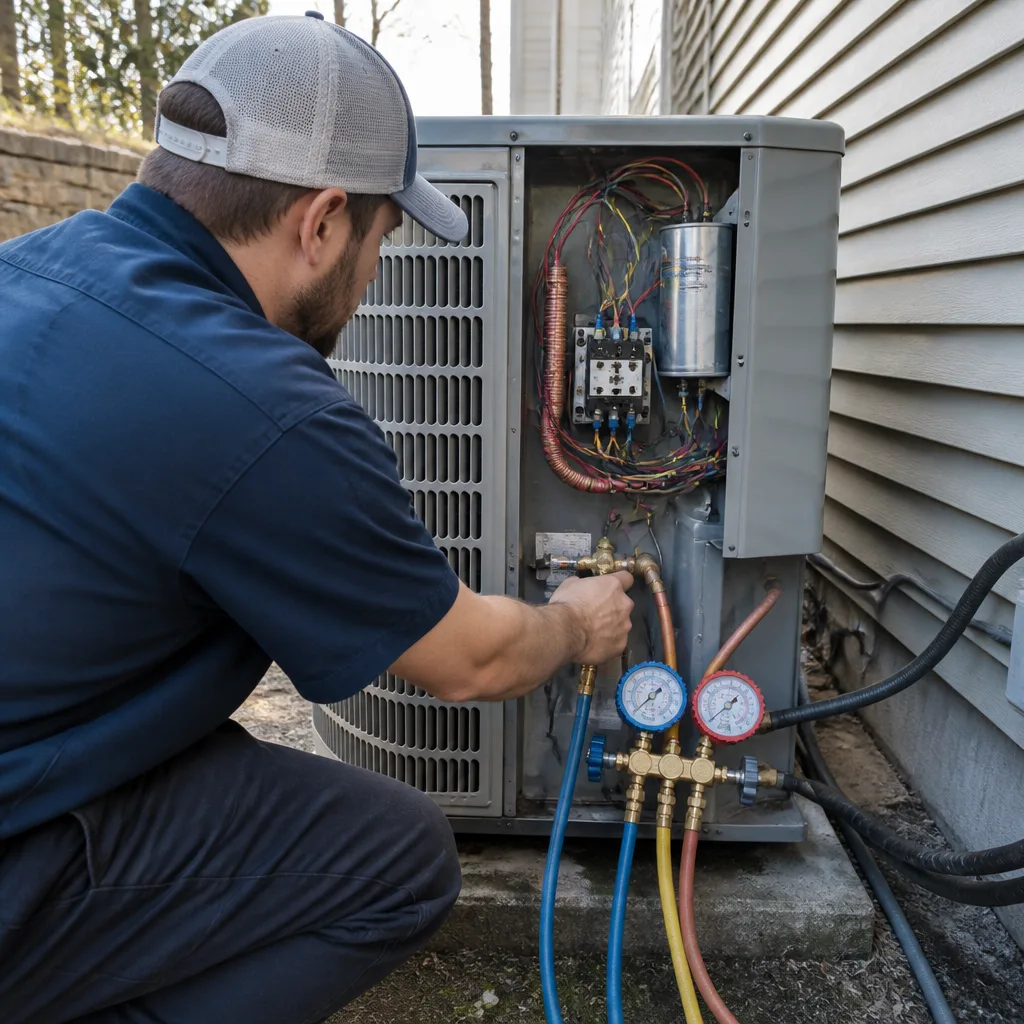
Daikin builds capacitors into nearly every residential split system, heat pump, and ductless mini-split they sell. That covers the DX series condensing units, FTX wall-mounted indoor heads, VRV/VRV Life systems, and the Daikin Fit line. The capacitor is housed inside the outdoor unit’s electrical compartment, usually a silver or black cylinder with two or three terminals on top and a label showing the microfarad (µF) rating and voltage.
Here’s the compatibility gotcha most people miss: Daikin uses dual-run capacitors on single-stage condensers, meaning one can feeds both the compressor and the fan motor. A generic “AC capacitor” from a big-box store rarely matches the exact µF split Daikin specifies, and an undersized or oversized part will kill a compressor in one New York summer. We match the printed rating on your existing capacitor to the OEM spec or a quality aftermarket equivalent from Amrad or Titan. For older Daikin units, we also check whether the capacitor is the round-can style or the oval style, because the mounting bracket differs and forcing the wrong shape in is a fire hazard.
Styles & brands we work with
Signs Your Daikin Capacitor Replacement Is Failing
- Humming outdoor unit, fan not turning. The compressor is trying to start but the capacitor can’t provide the kick it needs. If you hear this, shut the system off at the breaker and call us; running it in this state for even an afternoon can overheat the compressor windings.
- Air conditioner runs but blows warm air. The indoor blower is working, but the outdoor compressor never engaged. In New York’s humid July heat, you’ll notice this within minutes because the air from the vents feels stale and damp.
- Breaker trips when the AC cycles on. A failing capacitor forces the compressor to draw far more current than designed. The breaker does its job and cuts power, but the underlying cause is still sitting in the condenser.
- Clicking sound from the outdoor unit every few minutes. That’s the compressor’s overload protector resetting after a failed start attempt. Each click is one more cycle of stress on a motor that isn’t turning.
- Visible bulging, leaking, or rust on the capacitor itself. If you open the electrical panel (with the power off) and see the top of the capacitor domed outward or a brownish fluid seeping from the terminals, it has already failed. Do not touch it; even a discharged capacitor can hold a residual charge.
See the difference
 Before
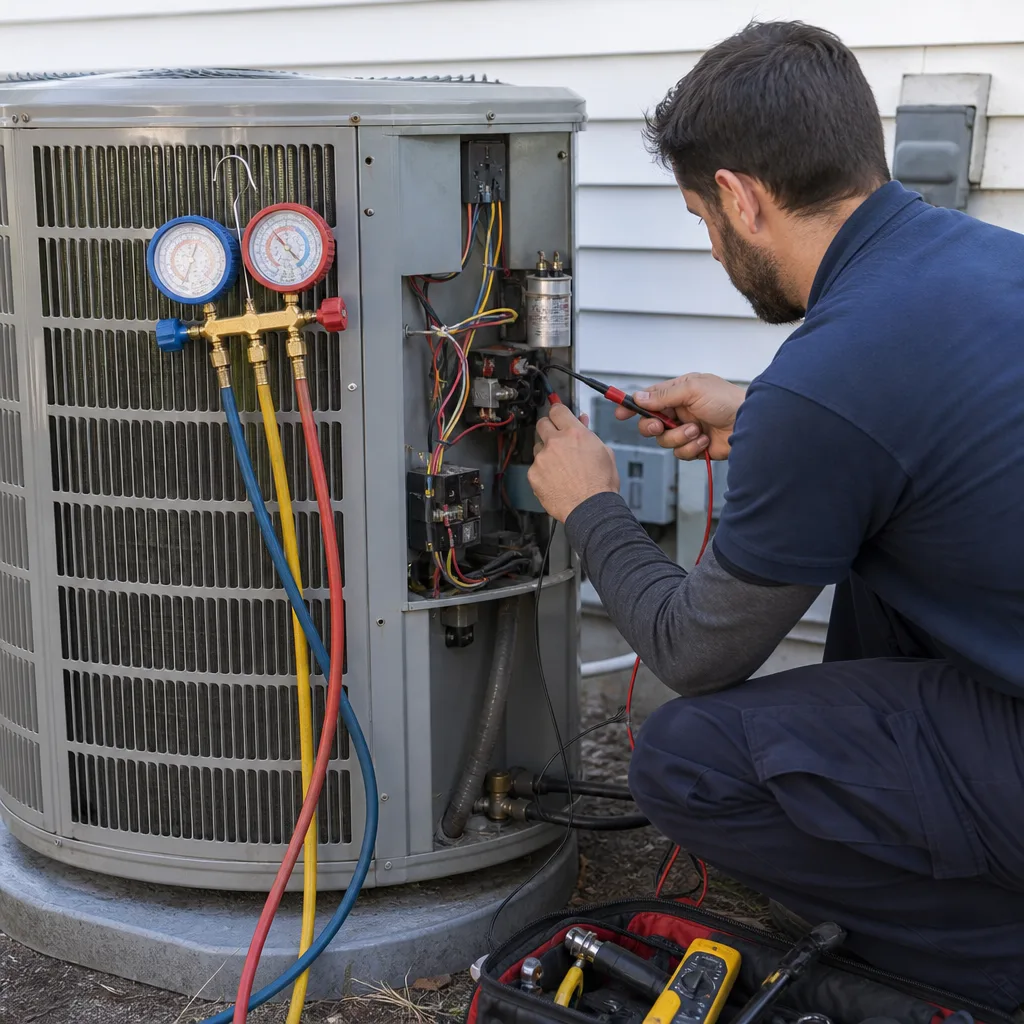 After
After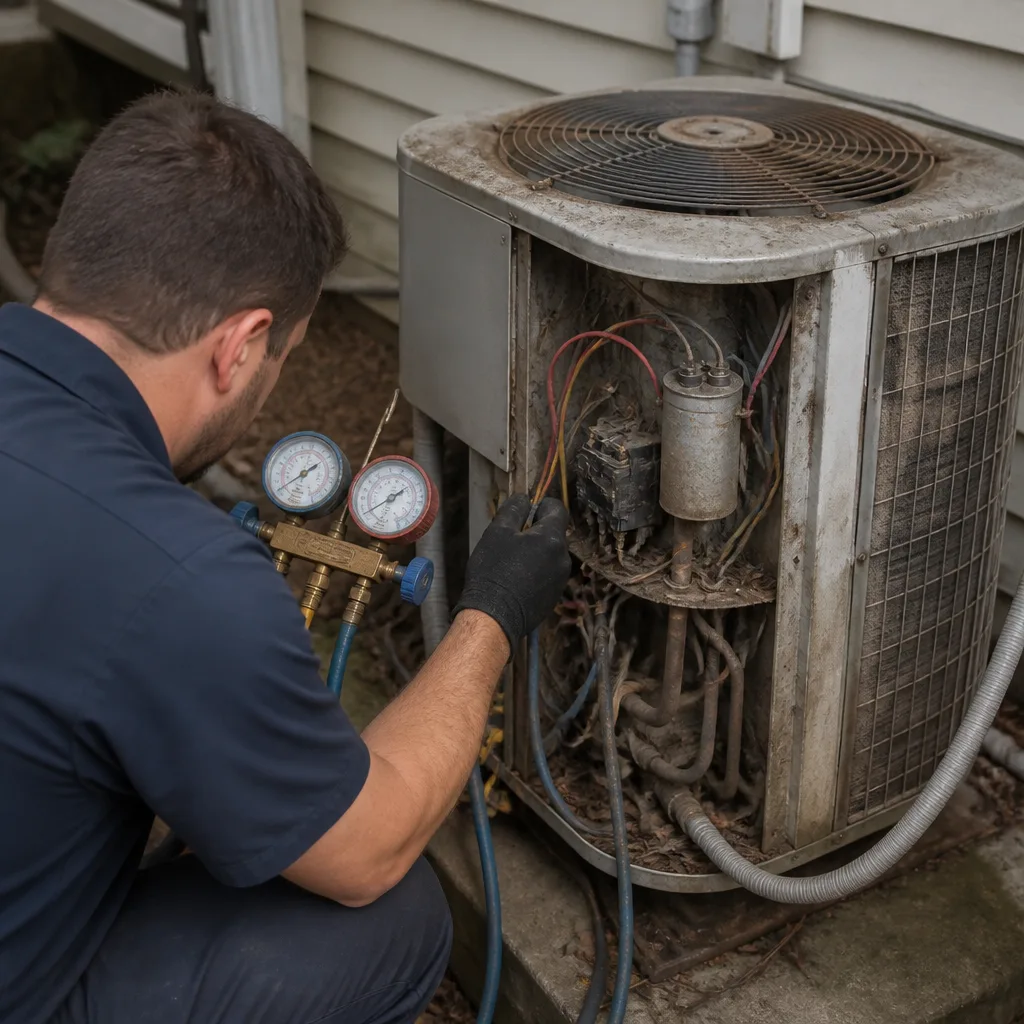 Before
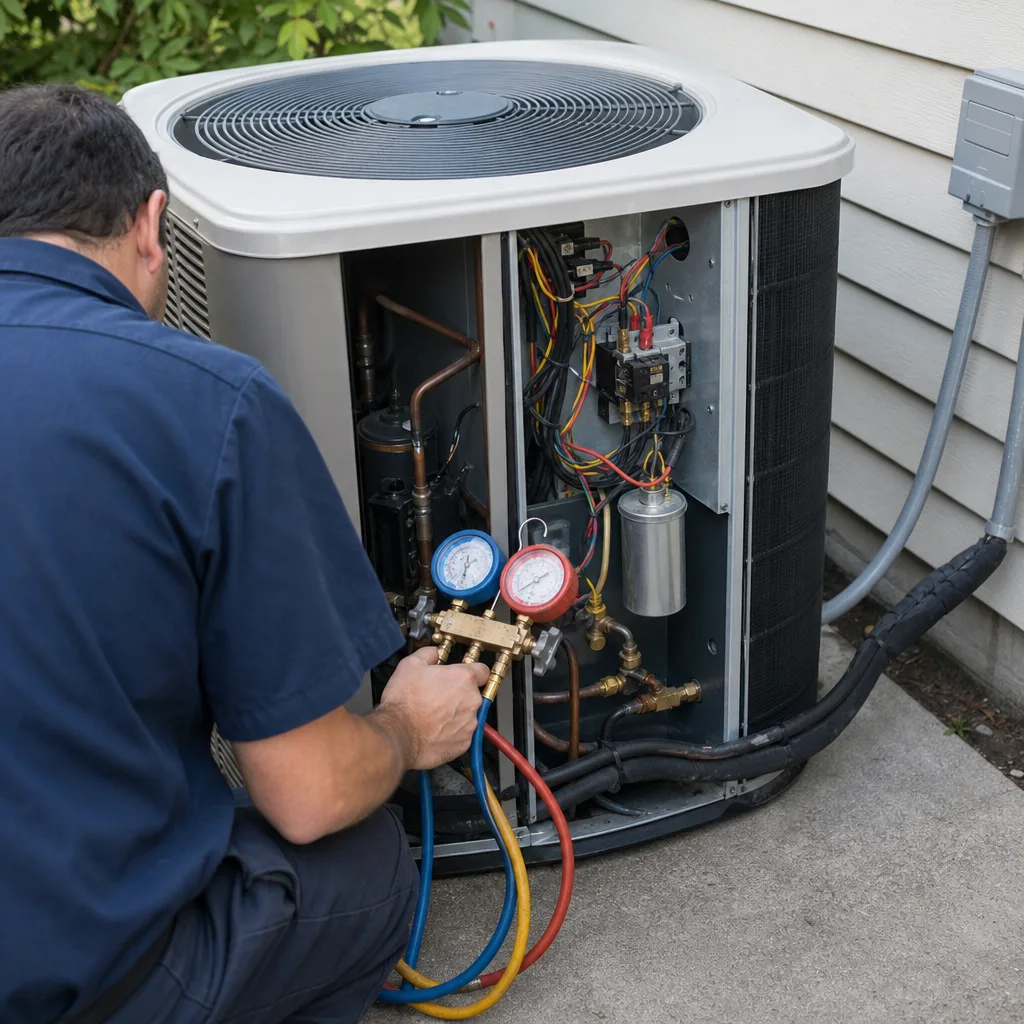 After
After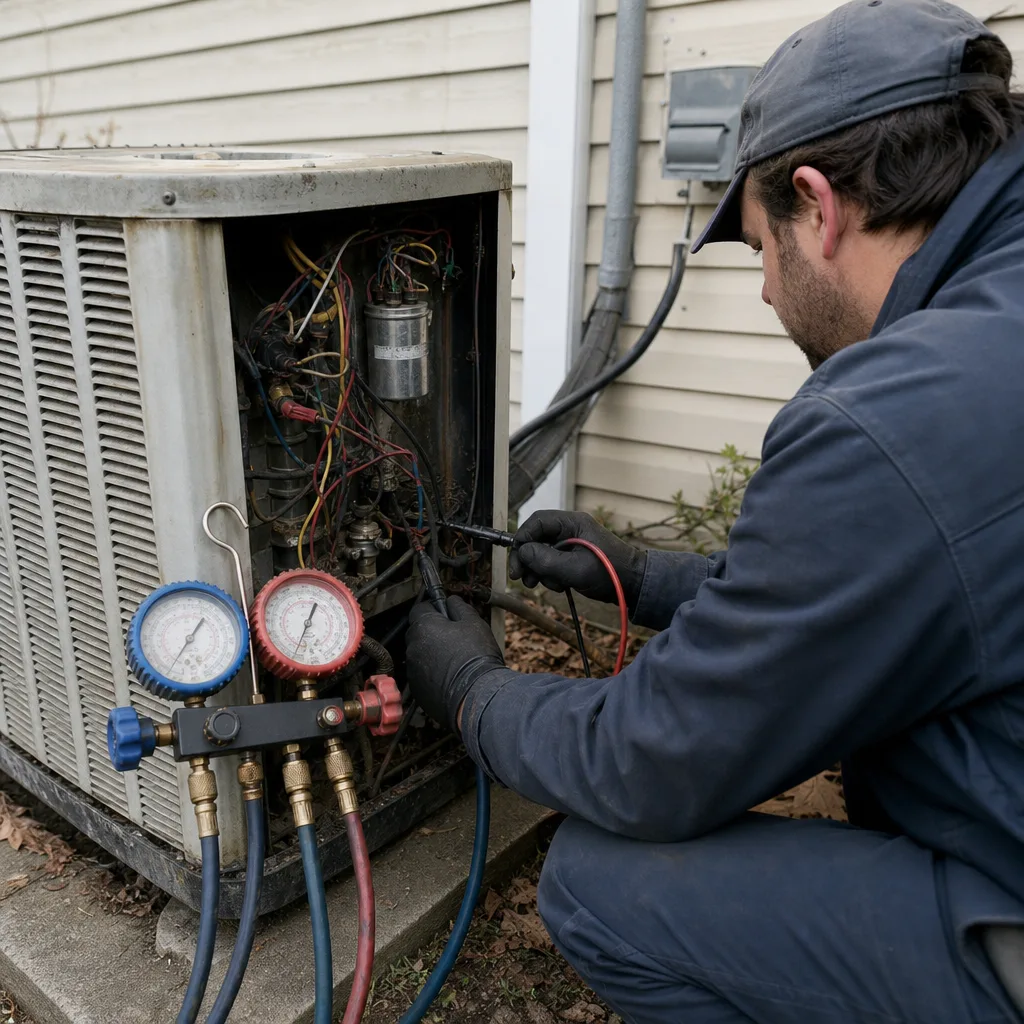 Before
 After
AfterReplacement Cost & What’s Included
In New York, a Daikin capacitor replacement runs $175 – $325 installed, depending on whether you have a single run capacitor or the dual-run style, and whether the part is a standard 370V or the heavier 440V version Daikin uses on some heat pumps and larger condensers. The capacitor itself typically costs $25 – $75 at our cost; the rest is diagnostic time, labor, and a written guarantee.
Every replacement includes a written price before work begins, the capacitor matched to your Daikin’s exact specs, a check of the contactor and wiring in the same visit, and our 365-Day Done Right Promise. If the new capacitor fails inside a year, we come back and replace it at no charge. That’s on paper before the technician leaves your driveway.
DIY or Call Us?
There’s one thing a homeowner can safely do: look at the capacitor label and write down the µF rating and voltage before calling us. That helps our technician confirm the right part is on the truck. What you should not do is attempt the swap yourself. A capacitor stores enough voltage to stop a heart, even with the breaker off, and shorting the terminals with a screwdriver is how people end up in the emergency room with burned hands. We discharge the capacitor properly, test it under load, and replace it in about an hour.
If you’re in New York and your Daikin is acting up, call (934) 465-5501. Victor Mancini or one of our techs will pick up, ask what the unit is doing, and get someone to you fast.
FAQs
A Daikin capacitor typically lasts 5 to 10 years in New York’s climate, but heat exposure shortens that. Units installed on rooftops in direct sun or in tight enclosures with poor airflow fail sooner, which is why we see most capacitor failures in July and August when the condenser runs hardest.
No. Capacitors are sealed, non-serviceable components. Once the internal dielectric breaks down or the can bulges, the only correct repair is replacement. The good news is that it’s one of the least expensive parts on your Daikin system.
Most Daikin capacitor replacements take under an hour once the technician is on site. That includes discharging the old capacitor, removing it, installing the new one, testing the unit through a full cooling cycle, and documenting the guarantee.
Yes. Our trucks carry the most common Daikin dual-run and single-run capacitors in 370V and 440V ratings, along with the correct mounting brackets. If your unit needs an uncommon spec, we can usually source it same-day from a parts house in the city.
Written by Victor Mancini, Owner, Cold Harbour Heating and Air New York at Cold Harbour Heating and Air New York, serving New York and nearby areas.