
Last updated October 16, 2026
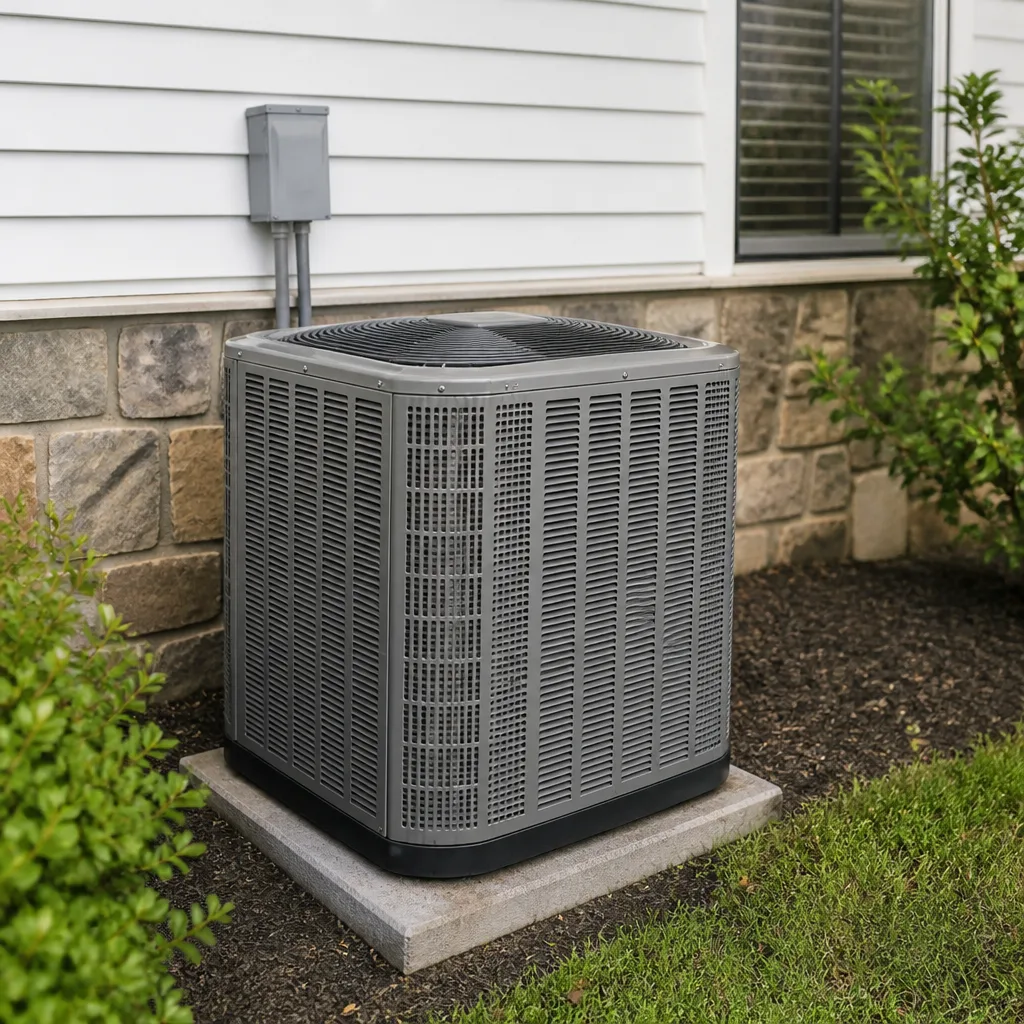 AC repair
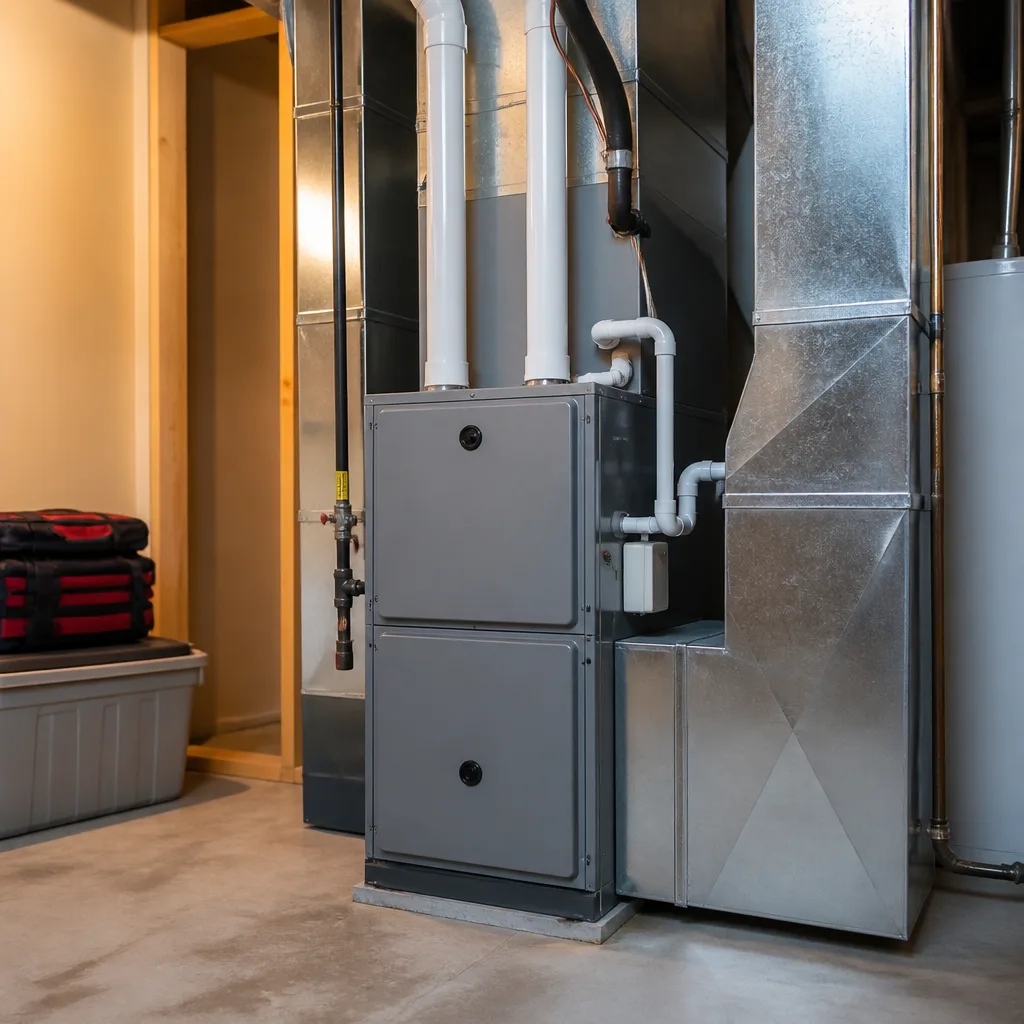 Furnace & heating
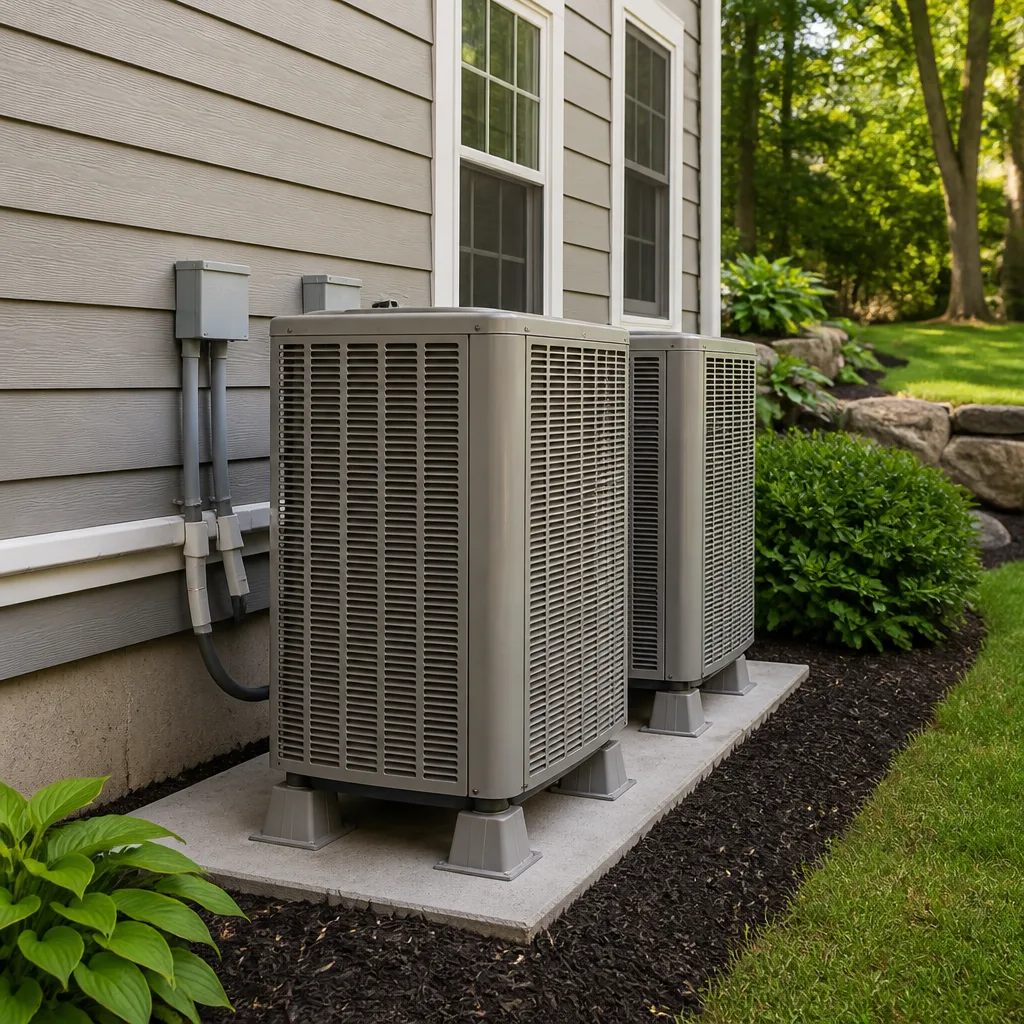 Heat pumps
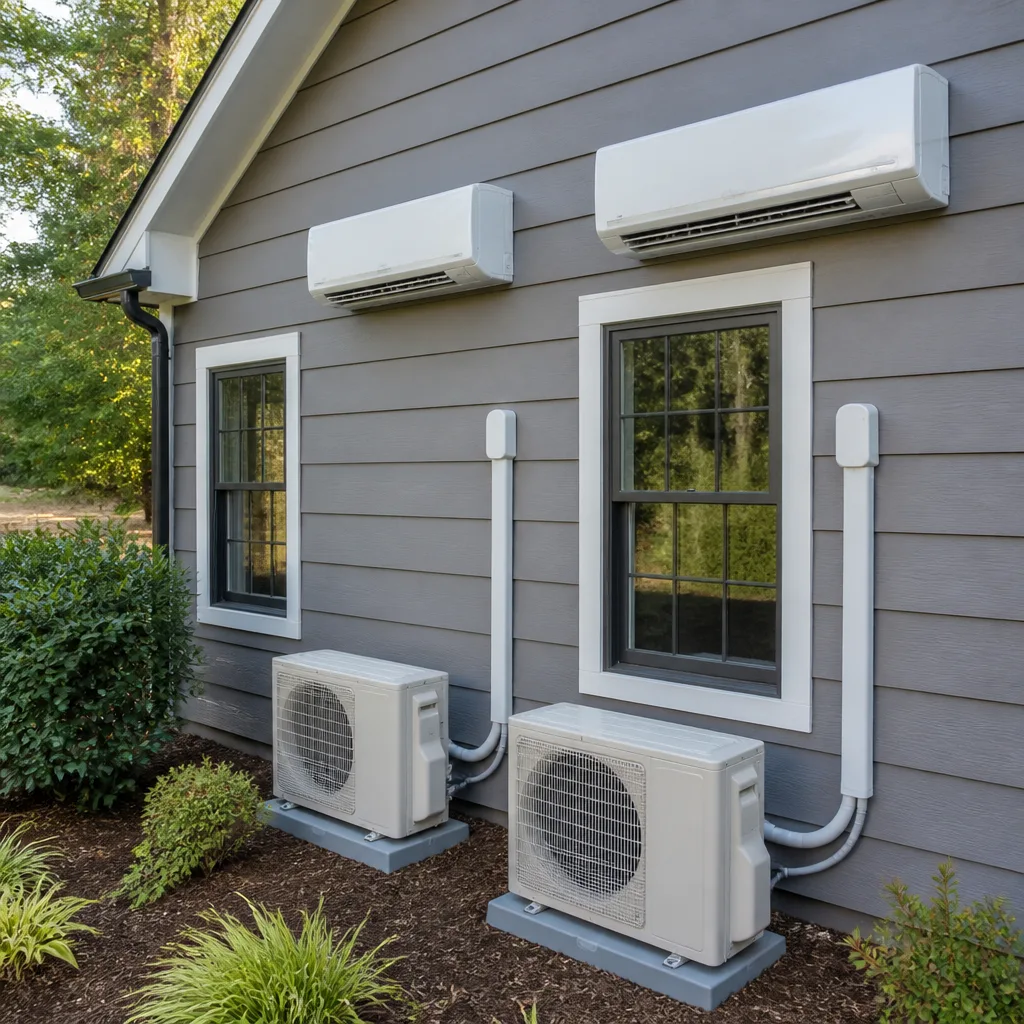 Ductless mini splits
 Carrier
 Trane
Trane Goodman
Seasonal tune-up and full diagnostic on your Carrier, Trane, or Goodman system - readings shown to you before any repair is proposed
Diagnosis first, numbers second - you approve the repair price before a single part goes in.
Get your free estimateAC Repair Maintenance Checklist for New York Homeowners
Here’s a number most national maintenance guides won’t tell you: in New York, a window AC unit or split system sits completely idle for roughly eight months a year. Then, on a single June afternoon when the temperature cracks 90 degrees, every unit in the building gets switched on at once. That’s not a gradual start. That’s a stress test. The most common reason a New York AC fails on the first truly hot day isn’t a dead compressor. It’s a clogged condensate drain that sat untouched since September, slowly filling the drain pan with standing water all winter, corroding the metal until the pan finally lets go. This checklist is built around New York’s actual climate calendar, not a generic southern-state schedule. You’ll learn exactly what to check, when to check it, what it should cost, and which tasks you can safely do yourself versus which ones belong in a technician’s hands. For a deeper dive, see DIY vs Professional HVAC: The New York Homeowner’s Decision Guide.
Quick Answer
An AC maintenance checklist for New York homeowners breaks into three parts: a shutdown routine in late September or early October, a winter idle-period check in January or February, and a pre-season inspection and cleaning in April or May before the first heat wave hits. The five failure points most New York-specific checklists ignore are window unit weatherstripping, through-wall sleeve corrosion, rooftop condenser debris, split-system line insulation, and drain pan condition after winter. A professional pre-season inspection in New York typically costs $89 to $189, and a proper visit should include capacitor testing, coil cleaning, drain clearing, refrigerant levels, and a written report of amp draws and temperature splits.
Styles & brands we work with
Table of Contents
- The September Shutdown Checklist: How to Put Your AC to Bed Properly
- The Winter Idle Period: The Eight Months Most Guides Ignore
- The Pre-Season Inspection: What to Do Before the First Heat Wave
- The Five New York-Specific Failure Points
- How to Document Your System’s Condition Before Calling a Contractor
- What a Pre-Season Inspection Should Cost in New York and What It Must Include
- Maintenance Tasks That Can Void Your Warranty (and Which Ones Are Safe DIY)
- Manufacturer-Specific Maintenance Notes for New York Homes
The September Shutdown Checklist: How to Put Your AC to Bed Properly
Most New Yorkers simply switch the unit off when the first cool week arrives in late September or early October and forget about it until June. That’s exactly how small problems become big ones. A unit that goes into winter storage with moisture inside a dark, enclosed space is a unit that breeds mold, rusts components, and emerges in spring with problems that didn’t exist when you turned it off. Here’s the shutdown routine we recommend to every homeowner in New York.
- Run the unit on fan-only mode for 30 minutes. Switch the thermostat from cool to fan and let it run. This dries the evaporator coil and the interior of the unit. Moisture left on the coil for eight months in a New York apartment or brownstone interior is a recipe for mildew that you’ll smell the moment you turn it back on in June.
- Clean or replace the filter. If it’s a washable filter, rinse it and let it dry completely before reinstalling. If it’s disposable, replace it. A dirty filter stored all winter bakes the grime onto the mesh and forces the blower motor to work harder when spring arrives.
- Inspect the condensate drain line. This is the single most overlooked shutdown step in New York. Pour a cup of white vinegar down the drain line (for split systems) or tilt a window unit slightly to let any standing water drain out. The drain pan should be bone dry before the unit goes dormant.
- Check the weatherstripping and seals. For window units and through-wall sleeves, examine the foam or rubber gasket that seals the unit to the window frame or wall opening. New York winters freeze any gaps, and once frozen, water expands and widens the gap. What starts as a 1/8-inch crack in October becomes a 1/2-inch draft by February.
- Clean the exterior surfaces. Wipe down the unit’s exterior with a damp cloth and mild soap. Remove visible debris. Don’t use a pressure washer, it will bend the condenser fins. For rooftop condensers in New York, clear away any leaves, twigs, or loose roofing material that gathered over the summer.
- Cover outdoor components if accessible. For rooftop condensers or split-system outdoor units, a breathable cover (not plastic, which traps moisture) protects the unit from New York’s freeze-thaw cycles. For window units, some New Yorkers remove them entirely and store them indoors. If you leave the unit in place, cover the exterior-facing side with a breathable fabric cover.
Get this shutdown routine right and your pre-season inspection in April becomes a quick verification rather than a repair call.
The Winter Idle Period: The Eight Months Most Guides Ignore
National maintenance checklists are typically written for climates where the AC runs most of the year. In New York, your system hibernates through a long, cold stretch from October through May. That idle period creates its own set of problems, and a single mid-winter check can catch them before they become spring failures. Here’s what to do in January or February, ideally on a day when the temperature is above freezing.
What happens to an idle AC during a New York winter
Three things, specifically. First, moisture that was trapped inside the unit at shutdown freezes and expands. Freeze-thaw cycles stress solder joints, plastic components, and rubber seals. Second, dust and airborne particles settle into every crevice and harden. That hardened layer becomes an insulating blanket on the coil, reducing efficiency when you restart. Third, small animals sometimes nest inside warm, sheltered components. New York’s roof rats, squirrels, and pigeons are notorious for building nests in condenser units, through-wall sleeves, and even window unit interiors. A single mid-winter visual check can catch a nest before it becomes a wiring fire hazard in June.
The January checklist
- Visual inspection of the outdoor or exterior unit. Walk around the unit. Look for rodent droppings, nesting material, chewed wires, or visible damage from ice or falling debris.
- Check the cover. If you covered the unit in September, make sure the cover is still secure and not torn. Rooftop winds in New York are strong enough to rip a loose cover clear off a building.
- Check the drain pan. Shine a flashlight into the drain pan area. If you see standing water or ice, you have a drainage problem that will be ten times worse by June.
- Run the fan for 10 minutes. On a mild winter day (above 40°F), switch the system to fan-only mode and let it run briefly. This circulates air through the unit, displaces any musty air, and confirms the blower motor still works. Don’t run it on cool mode in sub-freezing temperatures.
- Check the thermostat. Batteries die during idle periods. If the thermostat display is blank or flickering, replace the batteries now, not on the first hot day.
One specific New York failure pattern
We’ve worked on through-wall sleeve units all over New York, and there’s a pattern that shows up every spring. A sleeve unit faces outward against a brick or masonry wall. During winter, the sleeve conducts cold directly into the unit’s interior. Any moisture inside the unit freezes against the metal. When it thaws in late February or early March, that water runs down into the drain pan, which is still cold enough to hold it as ice. By April, the pan has held water long enough to start rusting. By June, the pan fails. The fix in January is simply verifying the drain pan is empty and the drainage path is clear. Our AC repair in New York service sees this exact failure every spring, and it almost always traces back to water sitting in the pan through those catch-and-release freeze-thaw cycles.
The Pre-Season Inspection: What to Do Before the First Heat Wave
April and May are the critical months for AC preparation in New York. You want everything checked, cleaned, and tested before the first 90-degree day arrives, because the moment that heat wave hits, every qualified technician in the city will be booked solid for two weeks. Do your pre-season work in April and you’ll be cool in June while your neighbors are sweating through a waiting list.
The homeowner’s pre-season checklist
- Remove the cover and inspect. Take off the winter cover. Check for rust, corrosion, nesting, or damage. Shine a flashlight into the interior.
- Replace the filter. Even if you cleaned it in September, start the season with a fresh filter. For New York homes with central air, we recommend checking the filter monthly during peak season.
- Clean the condenser coils. For outdoor units, gently brush the fins with a soft brush or use a coil-cleaning spray designed for HVAC use. Never spray water directly into the electrical compartment.
- Clear the area around the unit. New York rooftop condensers, through-wall sleeves, and window units need at least 12 inches of clearance on all sides. Remove plants, trash, or accumulated debris.
- Test the system. Turn it on in cool mode. Set the thermostat 5 degrees below room temperature and let it run for 20 minutes. Confirm cold air is blowing, listen for unusual noises, and check for water dripping from the condensate drain.
- Measure the temperature difference. The air coming out of the vent should be about 15 to 20 degrees colder than the air going in. If it’s less than 12 degrees, something is wrong and you need a professional diagnosis.
Why April beats May
A pre-season inspection done in April costs the same as one done in May, but it gives you a critical advantage: if the technician finds a problem, you have weeks to schedule the repair before the heat wave hits. In May, you’re competing with every other New Yorker who just realized their AC is dead. April inspections also catch problems while parts are still in stock at local suppliers. By late May, common components like capacitors and contactors sell out quickly. We advise every homeowner we work with in New York to book their AC Repair and pre-season inspection no later than April 15.
The Five New York-Specific Failure Points
After 20-plus years of AC work in New York, we’ve identified five failure points that repeat again and again across every borough and building type, yet almost never appear on generic national checklists. Here’s what they are and why they matter here specifically.
1. Window unit weatherstripping failure
New York’s freeze-thaw cycle is brutal on the foam and rubber seals around window AC units. Every winter, water seeps into the seal gaps, freezes, expands, and widens the gap. By spring, the unit is rattling in its frame and leaking cold air into the room while hot outdoor air pours in around it. We’ve seen units where the weatherstripping had degraded so badly that the unit was essentially cooling the outdoors. Check the seal every spring. Replacement weatherstripping costs under $30 at any New York hardware store and takes 15 minutes to install.
2. Through-wall sleeve corrosion
Through-wall sleeves are common in New York apartment buildings, especially pre-war construction. The metal sleeve conducts cold from the outdoor face to the indoor face all winter. Condensation forms, water pools at the bottom, and rust starts eating the sleeve. We’ve pulled sleeves out of Upper West Side buildings that had rusted through completely, leaving sharp edges and a hole to the outdoors. Check for rust every spring. Minor rust can be sanded and painted. Major rust means the sleeve needs replacement, which is a job for a professional HVAC technician, not a handyman.
3. Rooftop condenser debris accumulation
Rooftop AC condensers in New York sit exposed to wind, rain, snow, construction debris, and pigeons. Over a single winter, a rooftop unit can accumulate leaves, twigs, gravel, bird droppings, and an alarming amount of feather material. That debris blocks airflow across the condenser coil, which forces the compressor to work harder, which shortens its life. A spring cleaning of the rooftop condenser is non-negotiable. If you can’t access the roof safely, hire a professional. Our technicians service rooftop units throughout New York and routinely remove several pounds of debris from a single unit each spring.
4. Split-system line insulation degradation
Split systems run two copper lines between the indoor and outdoor units. One of those lines carries cold refrigerant and must be insulated. In New York, exterior line insulation degrades quickly due to UV exposure in summer and freeze-thaw in winter. Exposed copper line loses efficiency and can even sweat and drip on interior walls. Check the line insulation every spring. If it’s cracked, peeling, or missing in sections, replace it. This is a simple job that takes under an hour, and the foam insulation sells for a few dollars a foot.
5. Drain pan condition after winter
This is the failure point we started with, and it deserves deep attention. In a New York window unit or through-wall unit, the drain pan sits under the evaporator coil. Water condenses on the coil, drips into the pan, and drains away through a hole. If that drain hole clogs during summer, the pan fills with water. In most climates, the water eventually evaporates. In New York, if the unit is switched off in September with a full pan, that water sits there through October, November, December, and beyond. It freezes, thaws, freezes again, and the constant expansion and contraction cracks the pan. By June, the pan leaks, water drips down the wall, and you have water damage on top of a failed AC. Inspect the drain pan every September and every April. If it’s rusty, replace it before it fails.
If you have a new AC installation in New York on your mind, this is exactly the type of failure we design around, proper drainage, accessible pans, and materials built for New York’s freeze-thaw reality.
How to Document Your System’s Condition Before Calling a Contractor
A maintenance checklist only protects you if you actually keep the results. When a technician arrives for a pre-season inspection, they’ll give you a report of what they found. If you haven’t documented your own baseline, you have no way to compare their findings against your own observations. This matters in New York, where the difference between an honest assessment and an upsell attempt can be a thousand dollars or more. Here’s how to build your own baseline so you can evaluate a technician’s report with confidence.
What to record before the technician arrives
- Take photos. Photograph the unit from multiple angles: the front, the top, the sides, the electrical plug, the drain pan area, and any visible brand labels. Store the photos with dates. If a technician later claims a part is damaged, you’ll have a dated record of what it looked like before the visit.
- Note the temperature split. Run the AC for 15 minutes and measure the temperature of the air going in and the air coming out. Write both numbers down. A healthy system should show a 15 to 20 degree difference. If the technician says the system is performing well, but your temperature split was only 8 degrees, you know something doesn’t add up.
- Record the unit’s age. Check the serial number on the label. The first few digits typically encode the manufacture date. For example, Goodman serial numbers often start with the year and month. The age of the unit tells you whether a repair recommendation is a repair-and-continue situation or a replacement-prompt situation.
- Document any symptoms. If you’ve noticed odd noises, water drips, unpleasant smells, or rooms that never cool properly, write them down with dates. A specific symptom log is far more useful to a technician than a general “it doesn’t work.”
- Note any recent repairs. If a part was replaced last season, have that information ready. A capacitor replaced last July should not need replacing again this April.
What an honest technician report should include
After the inspection, you should receive a written document listing: the amp draw on the compressor and fan motor, the refrigerant pressures (matched to the outdoor temperature), the temperature split before and after cleaning, the condition of the capacitor and contactor, any signs of wear or pending failure, and a prioritized list of recommendations with specific urgency levels, not vague “keep an eye on it” notes. If the report is vague, ask for specifics. A technician who can’t tell you the refrigerant pressure reading is not doing a full inspection.
What a Pre-Season Inspection Should Cost in New York and What It Must Include
There’s no single set price for an AC pre-season inspection in New York. What you pay depends on the type of system, the company you hire, and whether the inspection includes cleaning or just testing. Here’s what we’ve observed in the New York market.
- Window unit inspection: $49 to $99, typically including filter replacement, coil cleaning, drain line clearing, and thermostat calibration.
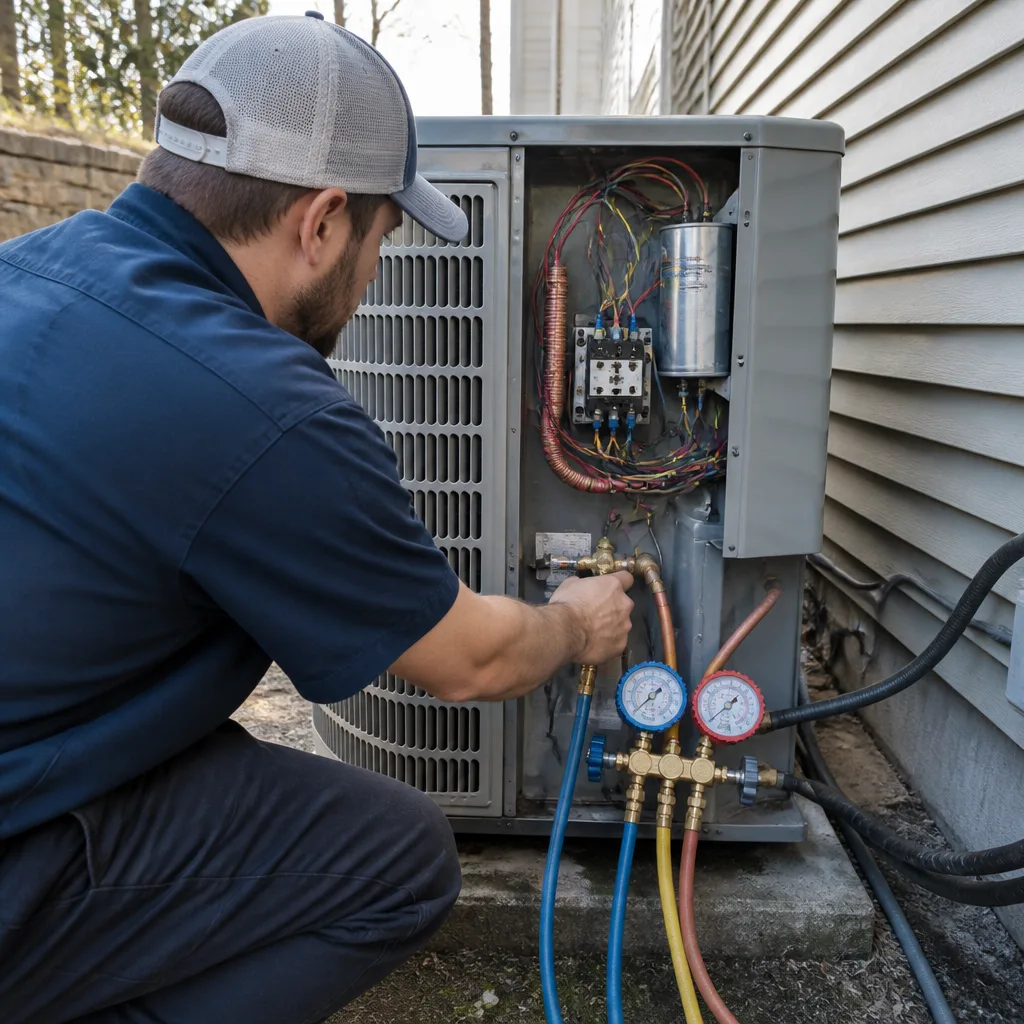
- Split system or central air inspection: $89 to $189, including the tasks above plus refrigerant pressure checks, capacitor and contactor testing, and amp draw measurements.
- Full clean and check with coil pulling: $175 to $350, for systems that require disassembly to access the evaporator coil. This is more common in older New York buildings where the indoor unit is tucked into a tight closet or ceiling cavity.
- Rooftop condenser inspection with access: $129 to $249, reflecting the time and care required to work safely on a New York rooftop.
If a company offers a $29 “inspection” special in New York, the inspection will be superficial. They’re getting in the door to find a repair upsell. A proper inspection takes at least 45 to 60 minutes and involves real testing, not just a glance and a filter change.
What a proper inspection must include
- Capacitor testing. The capacitor starts the compressor and fan motor. A weak capacitor is the single most common cause of a system that won’t start on the first hot day. A technician should test the capacitor with a meter and report its actual microfarad reading versus its rated value.
- Contactor inspection. The contactor is the electrical switch that delivers power to the compressor. Pitted contacts cause intermittent operation. This is cheap to replace ($30 to $80 parts and labor) but expensive to ignore.
- Refrigerant pressure and superheat or subcooling measurement. This confirms the system has the right amount of refrigerant and is operating efficiently. Low refrigerant is a sign of a leak, not just a top-off opportunity.
- Coil cleaning. Both the evaporator and condenser coils should be cleaned if dirty. Dirty coils reduce efficiency by 10 to 30 percent.
- Drain line and pan inspection. The technician should clear the drain line, check the pan for rust or cracks, and verify water flows freely.
- Temperature split measurement. Before and after cleaning, the technician should report the temperature difference between supply and return air. A healthy split is 15 to 20 degrees.
- Electrical connection tightening. Loose connections cause arcing, heat, and eventually component failure. Every accessible electrical connection should be checked and tightened.
At Cold Harbour Heating and Air New York, every pre-season inspection follows this protocol. We hand you a written report with the actual numbers, not a vague summary. That’s part of The Kingswell Way: say the price before the work, show up in the window given, leave the place cleaner than found, put the guarantee in writing, and come back if it fails.
Maintenance Tasks That Can Void Your Warranty (and Which Ones Are Safe DIY)
Manufacturer warranties come with fine print, and some of that fine print matters more in New York than anywhere else. The most important thing New York homeowners need to know is that refrigerant handling is legally licensed work. Under federal EPA regulations, only a technician with Section 608 certification can add or remove refrigerant. If you open a refrigerant line yourself, you void the manufacturer warranty immediately, and you’re also breaking federal law. That’s not a gray area.
Tasks that can void your warranty if done incorrectly
- Refrigerant handling. Opening the sealed system, adding refrigerant, or recovering refrigerant. This requires EPA Section 608 certification. Done by an unlicensed person, it voids the compressor warranty on the spot.
- Capacitor replacement done with the wrong part. Installing a capacitor with the wrong microfarad rating can damage the compressor motor. If the manufacturer can prove the capacitor was incorrectly sized, the compressor warranty claim becomes contestable.
- Coil cleaning with harsh chemicals. Using a pressure washer or strong acid-based cleaners on the condenser coil can bend fins and damage the aluminum. Manufacturers specifically warn against this. If you damage the coil, that’s not a warranty claim, it’s owner-caused damage.
- Modifying the unit’s electrical path. Bypassing a safety switch, rewiring components, or installing a non-standard control will void electrical component warranties. If you’re not confident with a multimeter, don’t touch the wiring.
- Improper winterization. Some manufacturers explicitly state in their warranty terms that the unit must be properly winterized in cold climates. Leaving water in the drain pan to freeze is considered owner negligence.
Tasks that are generally safe for homeowner DIY
- Filter replacement. This is the most important maintenance task and it’s completely safe. Buy the right size filter and swap it monthly during peak season.
- Exterior cleaning. Wiping down the unit, brushing the fins gently with a soft brush, and clearing debris from around the unit are all homeowner-appropriate.
- Drain line clearing with vinegar. Pouring a cup of vinegar down the condensate drain line monthly prevents algae growth. This is safe and recommended by every manufacturer.
- Weatherstripping replacement. Replacing the foam or rubber seal around a window unit is a simple, low-risk job.
- Thermostat battery replacement. If your thermostat runs on batteries, swap them every six months.
- Basic visual inspection. Looking for rust, cracks, loose wires, or animal nests is always your right and your responsibility.
When in doubt, call. A $99 inspection is cheaper than a voided warranty on a $3,000 compressor. If you’re dealing with a furnace repair in New York as well, the same principle applies: know what you can safely do, and know when to pick up the phone.
Manufacturer-Specific Maintenance Notes for New York Homes
Different brands have different maintenance quirks, and New York’s climate exposes them all. Here’s what we’ve learned servicing systems across the city over two decades.
Lennox systems in New York
Lennox condensers are known for tight fin spacing on the coil, which gives them solid efficiency but makes them more prone to debris clogging in New York’s soot-heavy air. A Lennox system in Manhattan or Brooklyn should have its condenser coil cleaned more frequently than the standard annual schedule, twice a year in areas with heavy construction dust. The good news: Lennox capacitor housings are well sealed, so they hold up better through the humidity swings than some competitors.
Goodman systems in New York
Goodman offers strong warranties that New York homeowners should read carefully. The compressor warranty typically runs 10 years if registered, but registration must be completed within 60 days of installation or it defaults to a much shorter period. We’ve seen too many New Yorkers lose coverage because they never registered their system. If you have a Goodman, find your registration paperwork today and confirm it’s on file. Maintenance-wise, Goodman drain pans are durable, but the drain openings tend to clog with the fine particulate matter common in New York air.
Rheem systems in New York
Rheem units have good corrosion resistance on the cabinet, which matters in New York’s coastal-influenced air, especially in neighborhoods near the water. However, Rheem contactors are sensitive to voltage fluctuations, which are common in older New York buildings with aging electrical infrastructure. If your Rheem system in a pre-war building won’t start intermittently, the contactor is the first place we look.
York systems in New York
York compressors are workhorses, but they don’t like voltage drops. In New York buildings where window units and central air all kick on simultaneously during a June heat wave, the voltage sag can strain a York compressor. The maintenance move that matters most for York systems in New York is having the capacitor tested every spring without fail. A weak capacitor on a York compressor under voltage stress is a recipe for a burned-out motor.
Whatever brand you have, the seasonal rhythm of New York demands the same core discipline: prepare in September, check in January, and verify in April. Our team at Cold Harbour Heating and Air New York home has been doing exactly that since 2003.
Common Mistakes to Avoid
- Skipping the September shutdown routine. Turning the unit off and walking away leaves moisture inside for eight months. That’s how drain pans rust and mold grows. A 30-minute shutdown routine in September saves you a repair call in June.
- Using a plastic cover. Plastic traps moisture against the unit all winter and promotes rust. Use a breathable fabric cover or leave the unit uncovered. If you’ve been using a plastic tarp, stop.
- Relying on a $29 inspection special. In New York, a cheap inspection is almost always a sales call in disguise. The technician spends 10 minutes looking at the unit and 30 minutes trying to sell you a replacement you don’t need.
- Running the AC in sub-freezing temperatures. Never test your system in cool mode when the outdoor temperature is below 60 degrees. The refrigerant pressures change with temperature, and you can damage the compressor. Use fan-only mode for winter testing.
- Ignoring a small water stain on the wall below the AC. In New York apartments, a small stain is rarely small. It usually means the drain pan has been slowly leaking for months. By the time the stain is visible, the pan is already failing.
- Replacing the filter only once a year. New York air is dense with particulates. During peak cooling season, a standard 1-inch filter gets loaded within a month. Check it monthly from May through September.
- Registering the unit under a previous owner’s name. When you buy an apartment or home in New York, transfer the HVAC system registration into your name. Otherwise, a warranty claim can be denied on a technicality.
See the difference
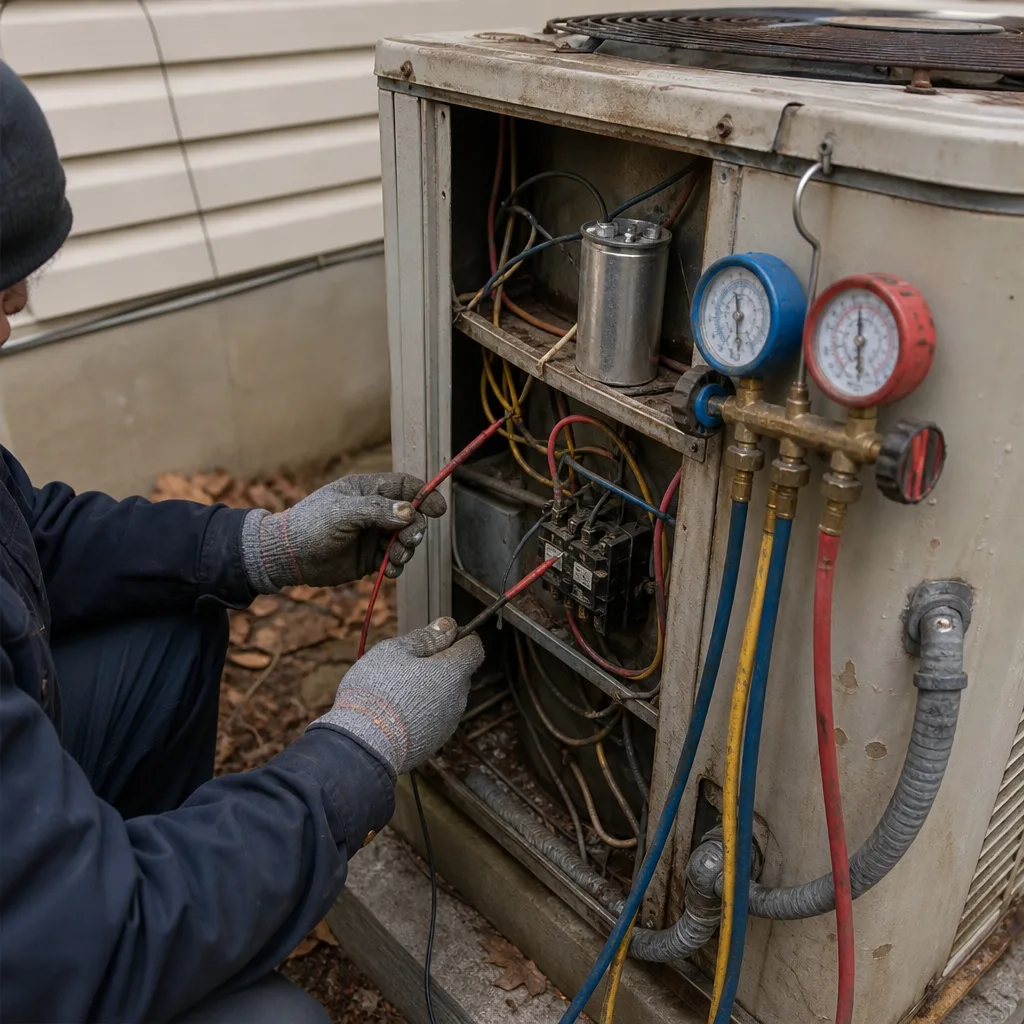 Before
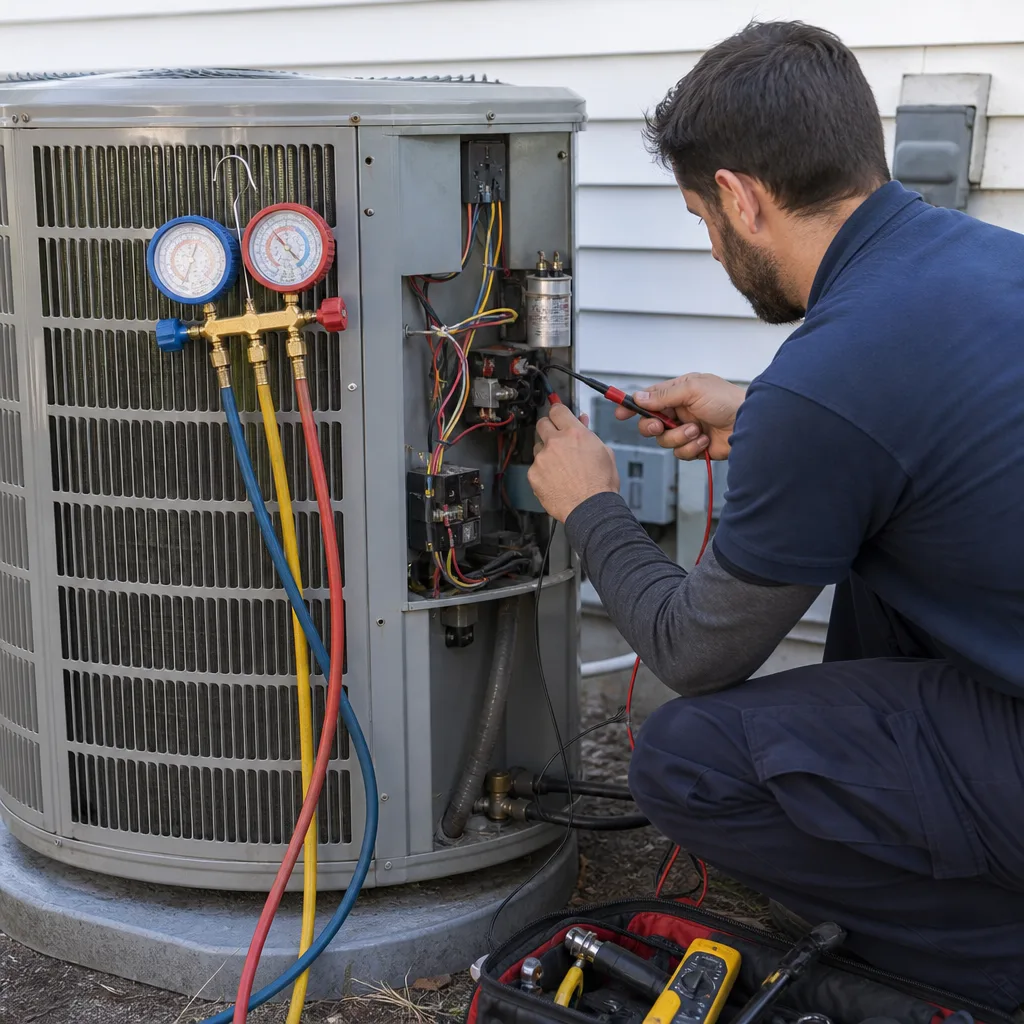 After
After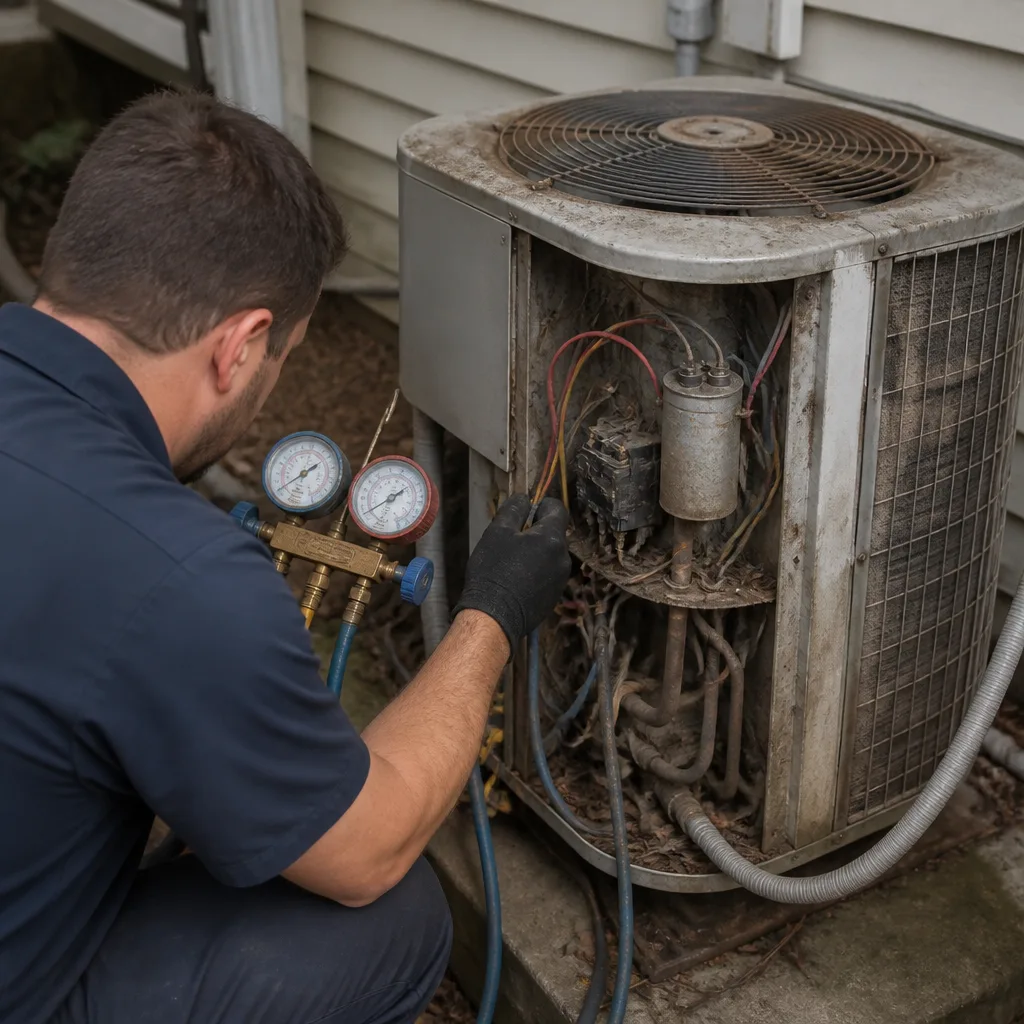 Before
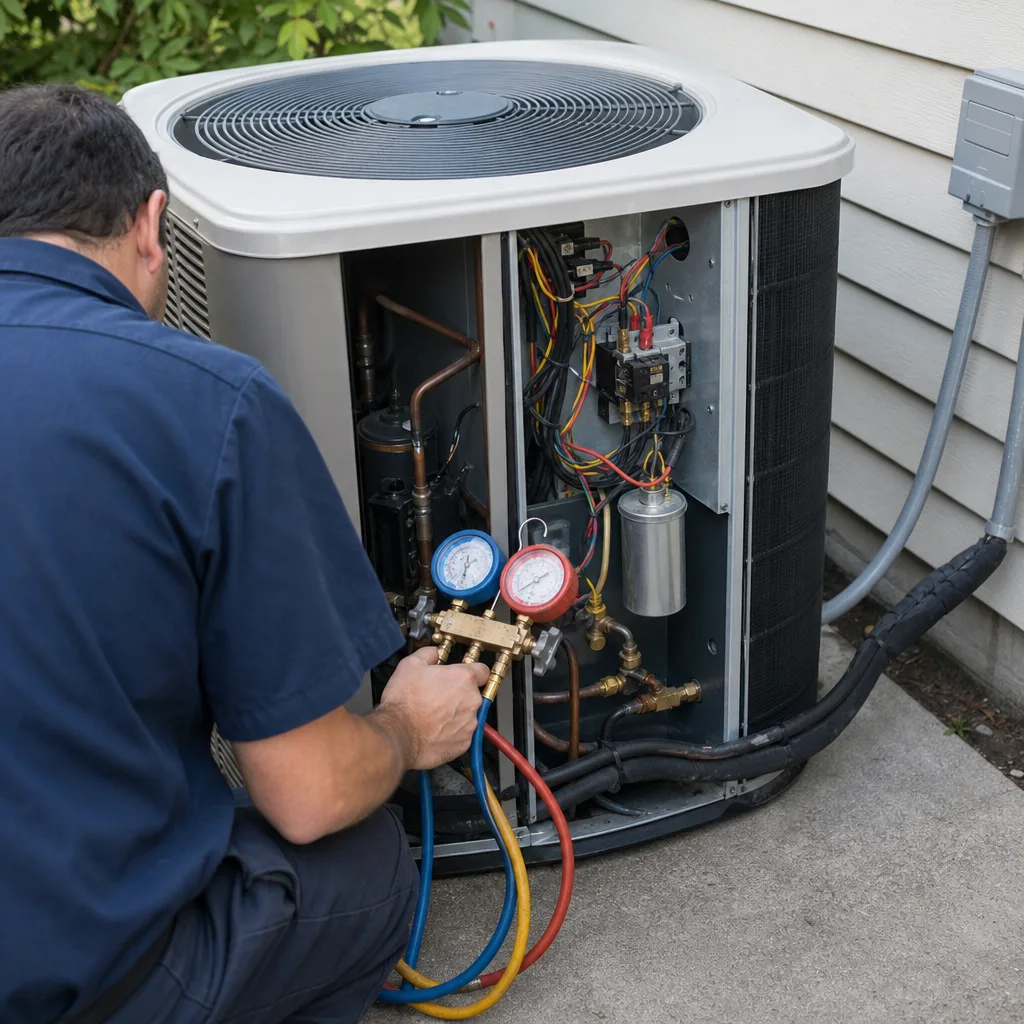 After
After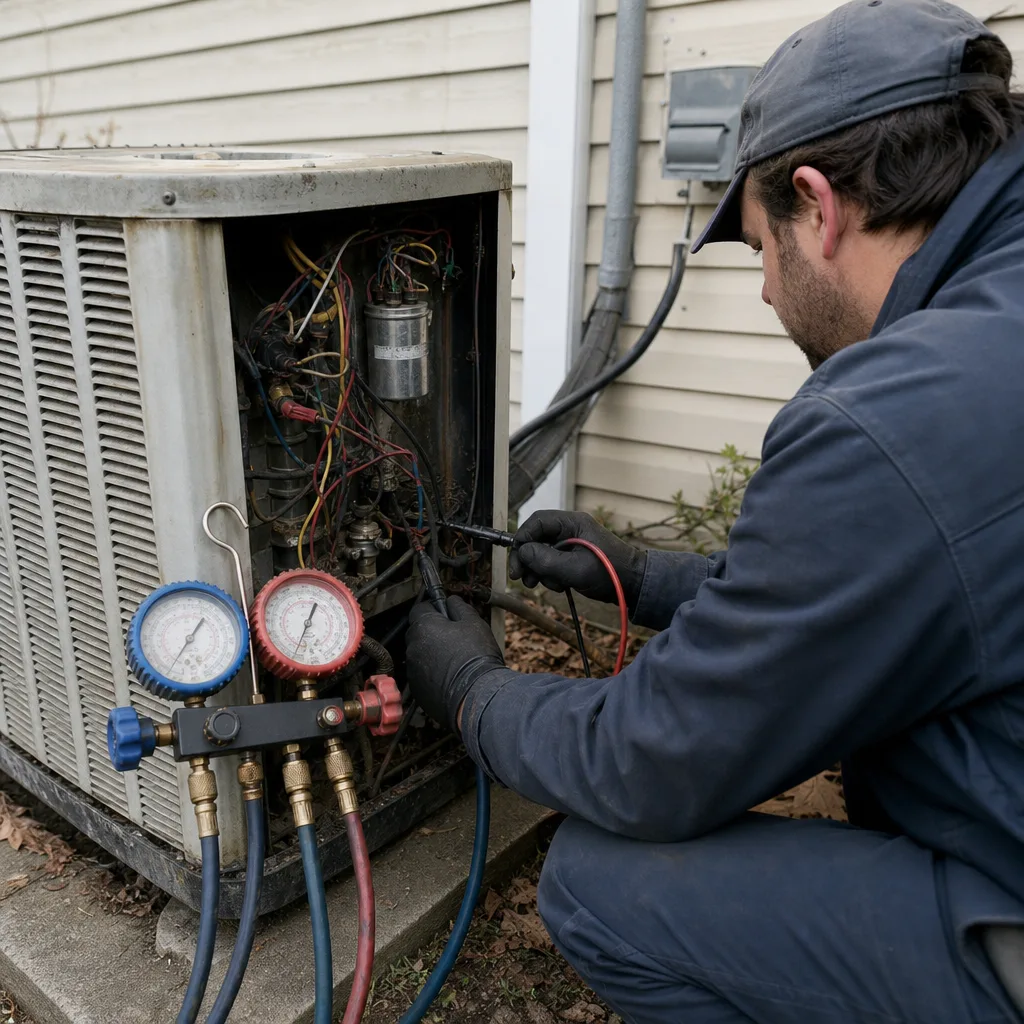 Before
 After
AfterWhen to Call a Professional
Some things on this checklist are genuinely DIY. Replacing a filter, cleaning the exterior, checking weatherstripping, pouring vinegar down the drain line, these are all in your range. But the moment you’re looking at refrigerant, capacitors, wiring, or a drain pan that’s rusted through, you’re in professional territory. A mistake with refrigerant is a federal violation. A mistake with a capacitor can damage the compressor. A mistake with wiring can start a fire. We’ve seen all three happen to New York homeowners who pushed DIY too far. Cold Harbour Heating and Air New York offers free estimates throughout New York. Call (934) 465-5501, tell us what you’re seeing, and we’ll give you an honest answer and a written price before any work begins.
Frequently Asked Questions
We recommend a professional inspection twice a year: once before cooling season (April or May) and once before heating season (October or November). At minimum, once a year in the spring is essential for AC health in New York’s climate.
No. Running without a filter pulls dust, hair, and airborne particles directly onto the evaporator coil. Within a few weeks, the coil is coated in an insulating layer that reduces efficiency and can freeze over. Filter replacement is the single most important maintenance task you perform, and it’s cheap.
The smell is almost always mold or mildew inside the unit. It happens when moisture sits in the drain pan or on the evaporator coil during the winter idle period. The fix is cleaning the coil, sanitizing the pan, and ensuring the drain line runs clear. If the pan is rusted, replace it. Call (934) 465-5501 if you need help.
With proper seasonal maintenance, a quality window unit in New York can last 8 to 12 years. Without maintenance, 5 to 7 years is more typical. The difference is almost always the drain pan and weatherstripping, which fail early when ignored but hold up fine with basic attention.
The general rule: if the repair costs less than 50 percent of a new unit and the unit is under 10 years old, repair it. If the repair costs more than 50 percent of replacement, or the unit is over 12 years old, replacement usually makes more sense. Our technicians will give you a straightforward comparison and let you decide, no pressure. Call (934) 465-5501 for an honest assessment.
Freezing is caused by low refrigerant, restricted airflow, or dirty coils. In New York, the most common trigger is a dirty filter that chokes airflow across the evaporator coil, causing the coil temperature to drop below freezing. Low refrigerant is the second most common cause and indicates a leak. Both are professional repairs.
The Bottom Line
A New York AC system needs a maintenance rhythm that matches the city’s climate: a careful shutdown in September, a mid-winter visual check in January or February, and a thorough pre-season inspection in April. The five failure points that define New York maintenance, window weatherstripping, sleeve corrosion, rooftop debris, line insulation, and drain pan rust, are all preventable with small, cheap interventions done at the right time. Document your baseline before calling anyone, know what a professional inspection should include and what it should cost, and never touch refrigerant or electrical components yourself. For more guides & resources, explore our blog. Call Cold Harbour Heating and Air New York at (934) 465-5501 for a free estimate, and you’ll get a written price, a firm arrival window, and a 365-day guarantee on every repair we make.
Written by Victor Mancini, Owner at Cold Harbour Heating and Air New York, serving New York since 2003.