
Last updated October 16, 2026
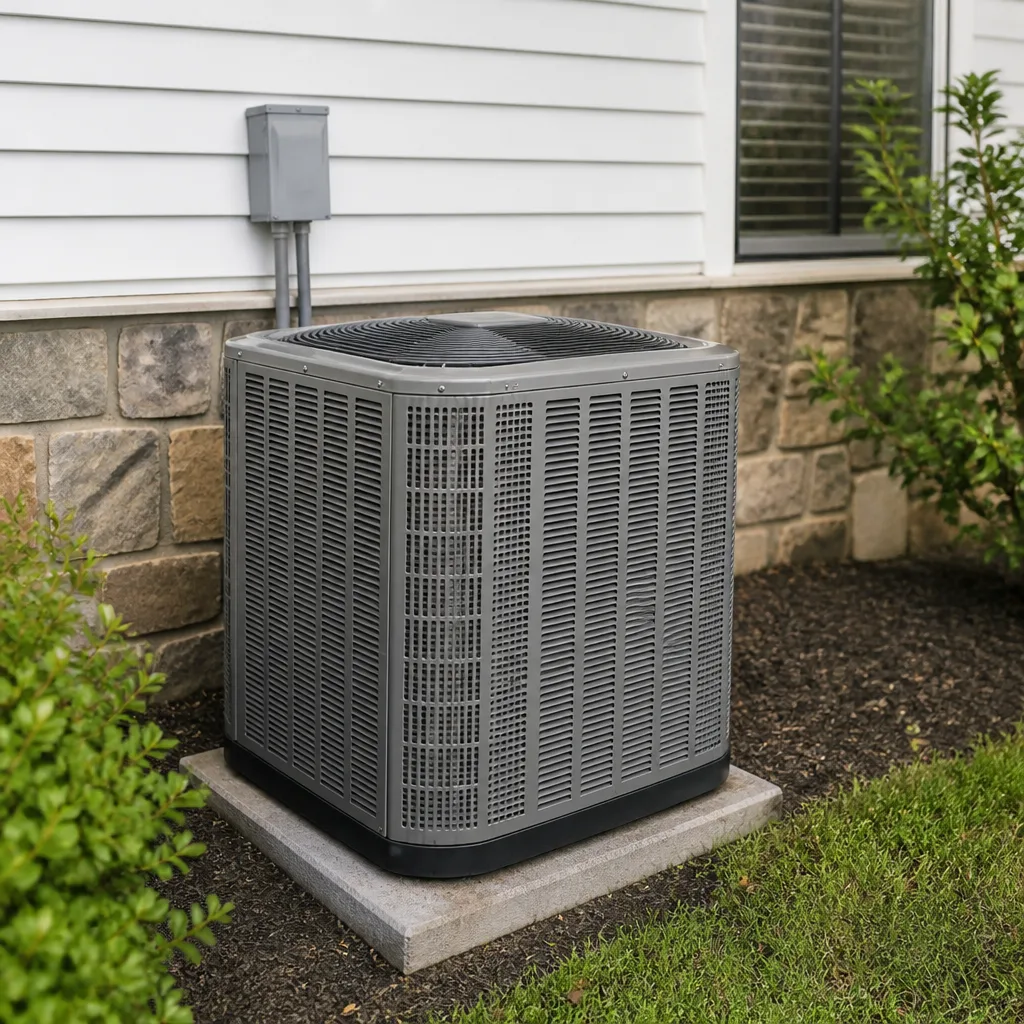 AC repair
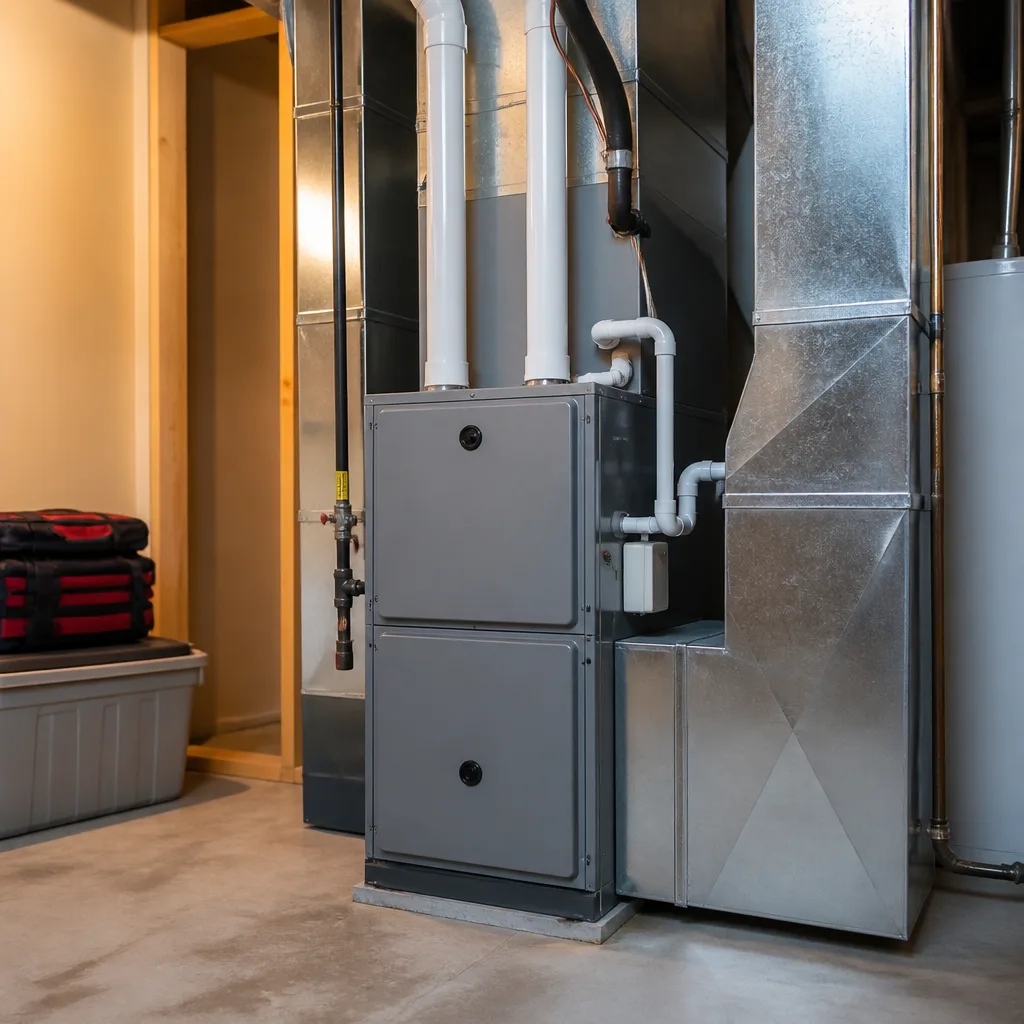 Furnace & heating
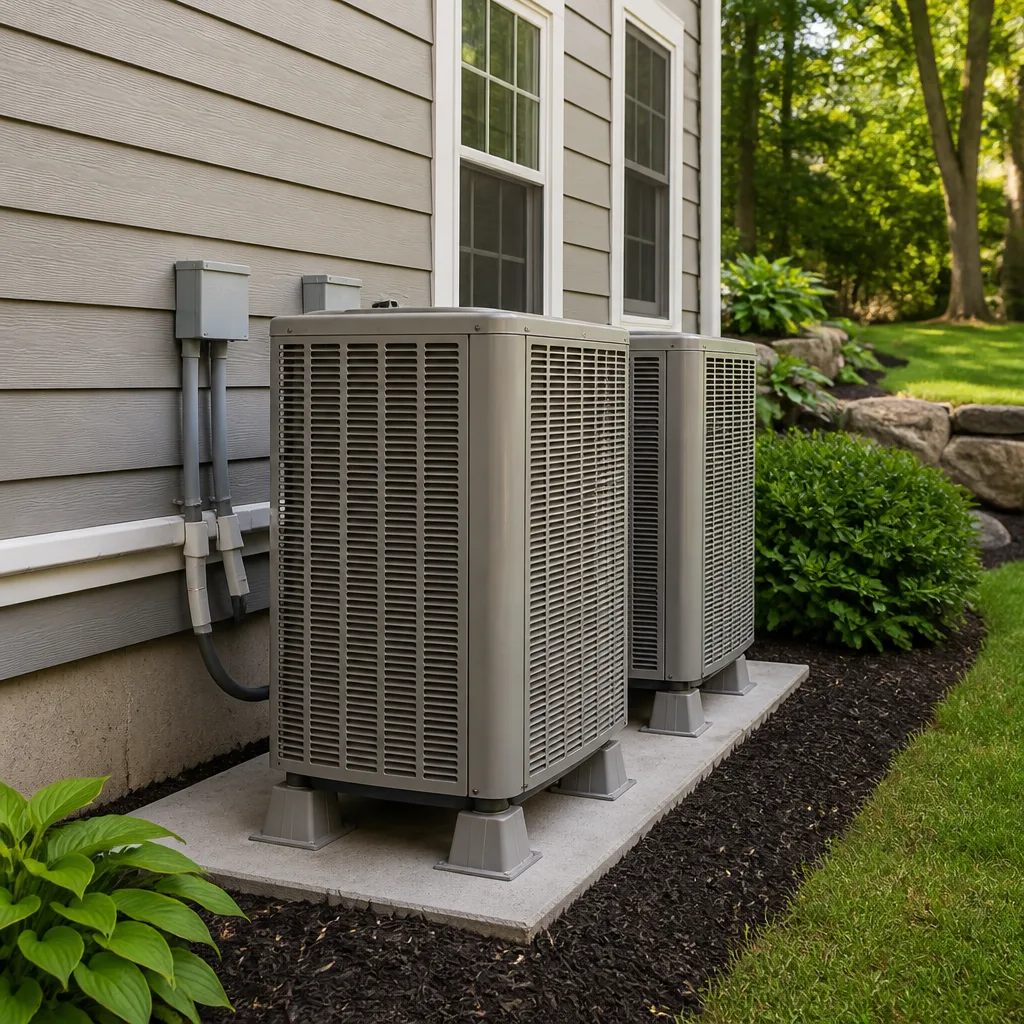 Heat pumps
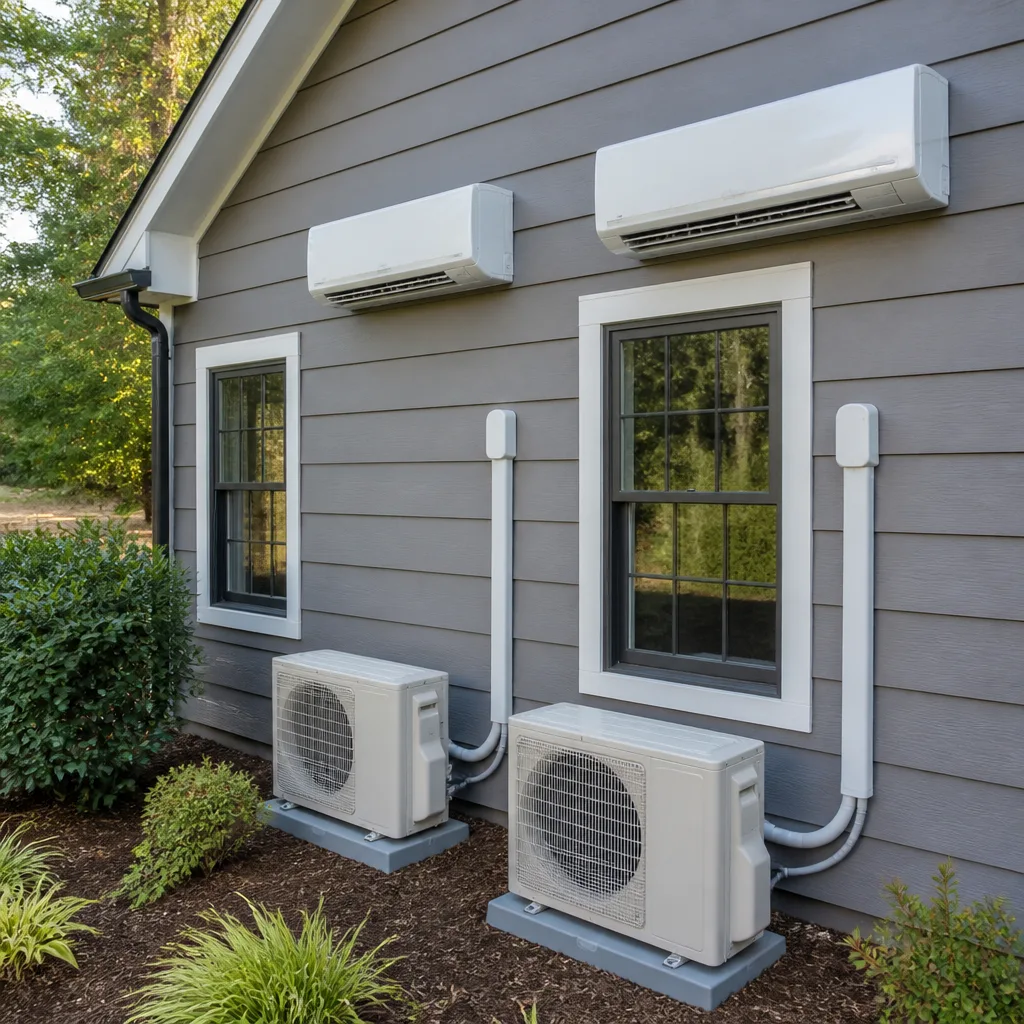 Ductless mini splits
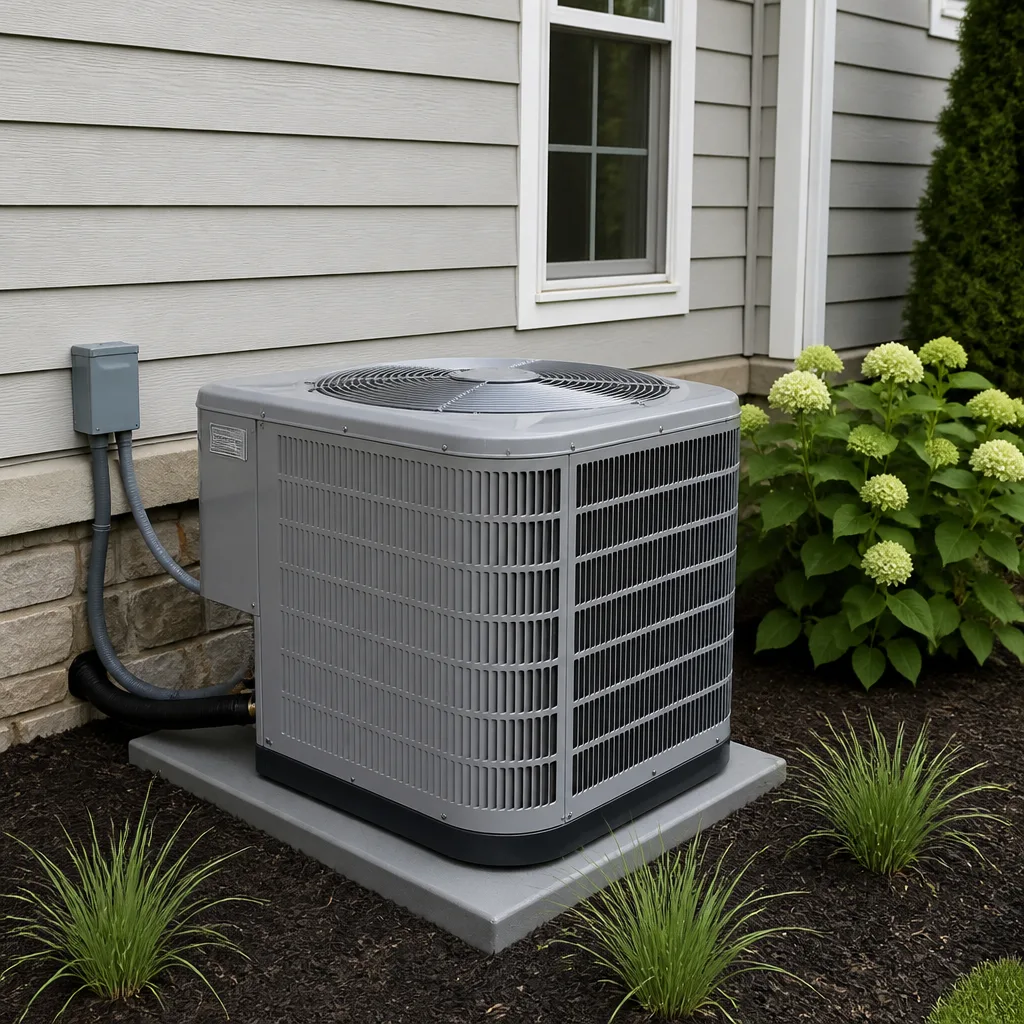 Carrier
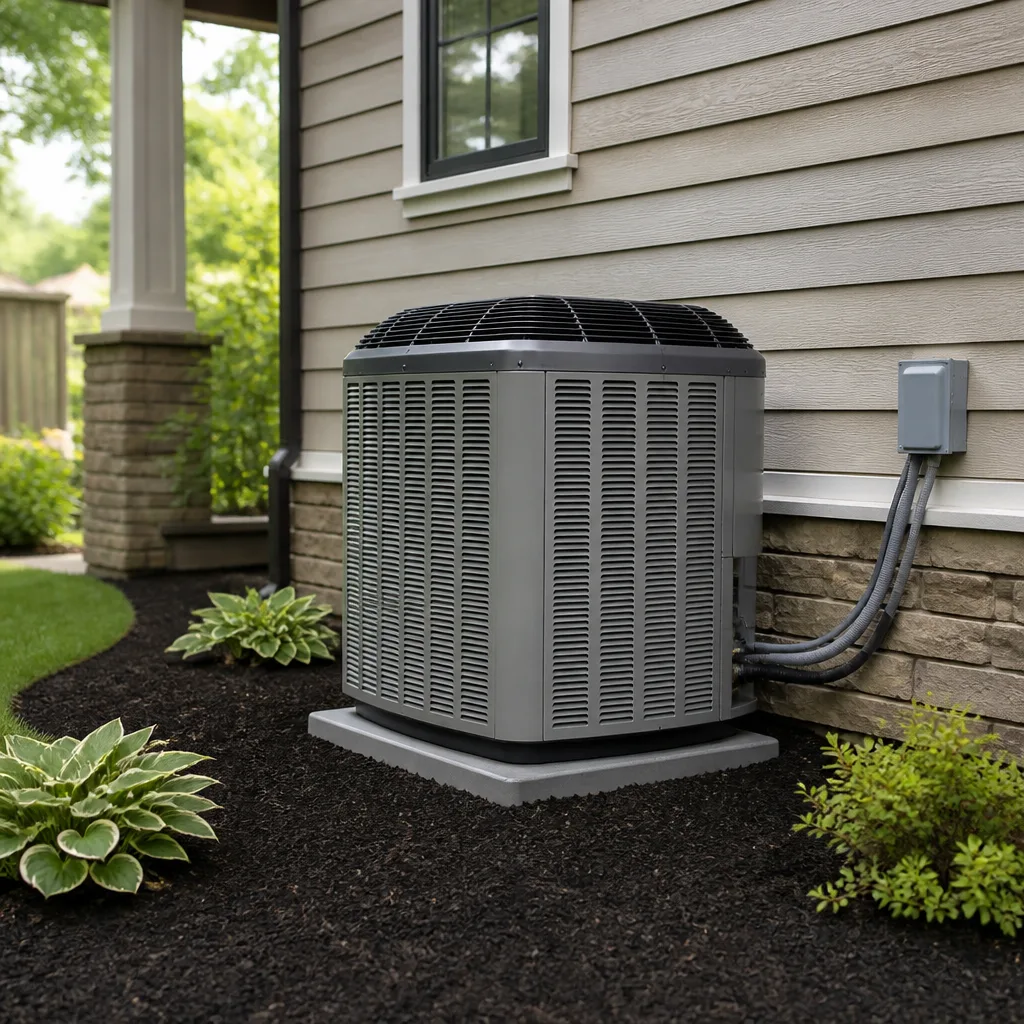 Trane
Trane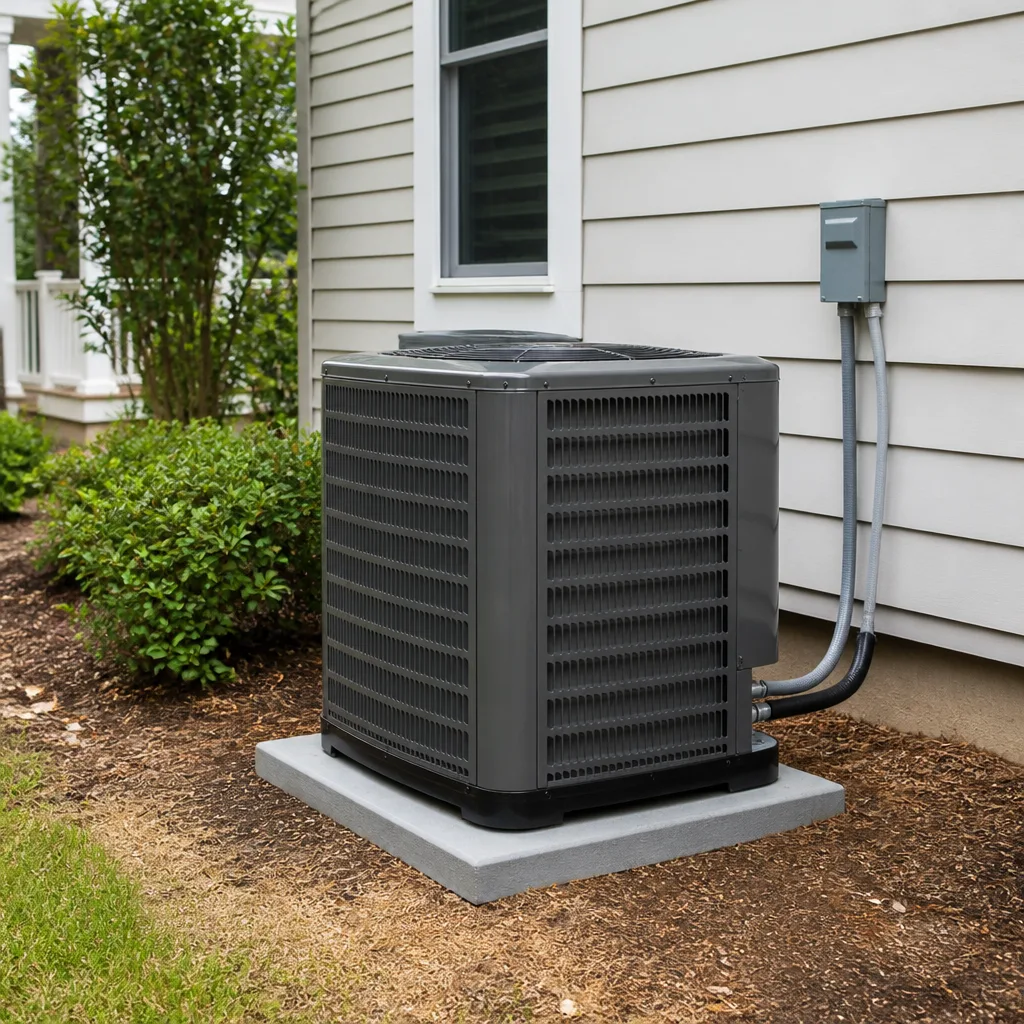 Goodman
Seasonal tune-up and full diagnostic on your Carrier, Trane, or Goodman system - readings shown to you before any repair is proposed
Diagnosis first, numbers second - you approve the repair price before a single part goes in.
Get your free estimateDIY vs Professional HVAC: The New York Homeowner’s Decision Guide
Replacing a window AC unit yourself is perfectly legal and sensible in New York. Swapping the refrigerant in that same unit yourself is a federal crime under the Clean Air Act, carrying fines up to $44,539 per day. The line between legal DIY and illegal DIY in HVAC work is specific, rarely explained, and different in New York than almost anywhere else in the country. This guide draws that line clearly: which tasks you can legally and safely do yourself, which ones require a licensed contractor, and what your co-op board, landlord, or building management will have to say about it. For related reading, see our HVAC Permits, Codes & Inspections in NY: What You Need to Know. If you own or rent in New York, understanding this before you pick up a tool will save you money, legal trouble, and a very awkward conversation with your neighbors.
Quick Answer
DIY HVAC in New York is limited to basic maintenance tasks like changing air filters, cleaning condenser coils, clearing drain lines, and replacing thermostats on systems you own outright. Anything involving refrigerant, gas lines, electrical panel connections, or modifications to building systems requires a licensed contractor under New York City code and federal law. If you live in a co-op, condo, or rental, your building documents may restrict even those basic tasks, and performing illegal HVAC work can trigger fines, lease violations, and liability for damage to neighboring units.
Styles & brands we work with
Table of Contents
- The Legal-DIY Line: What New York Homeowners Can and Cannot Touch
- Co-op, Condo, and Rental Rules: Your Building Documents Matter More Than City Code
- The True Cost of a DIY Mistake in a New York Building
- DIY Tasks That Genuinely Save Money in New York
- Tasks Where the Margin Is Too Thin to Justify the Risk
- Communicating With a Contractor After You’ve Done Preliminary DIY Work
- Questions to Ask Before Hiring Any HVAC Contractor in New York
The Legal-DIY Line: What New York Homeowners Can and Cannot Touch
Let’s start with the clearest statement we can make: you, as a New York homeowner, are legally permitted to perform certain HVAC maintenance tasks yourself. You are not legally permitted, under any circumstances, to handle refrigerant. The distinction is not a matter of skill. It is a matter of statute.
Under Section 608 of the federal Clean Air Act, anyone who services, repairs, or disposes of appliances containing ozone-depleting refrigerants must hold EPA Section 608 certification. That includes opening a refrigerant line, adding refrigerant, or recovering refrigerant from a system. The fine structure is as specific as it is severe: up to $44,539 per day, per violation. The Environmental Protection Agency does not distinguish between a homeowner and a contractor here. If you do the work and you are not certified, you are in violation.
New York State adds its own layer. Under the New York State Refrigerant Registration Program, any person who performs refrigerant work must be registered with the Department of Environmental Conservation. New York City’s Administrative Code Title 28 also requires that HVAC work involving gas piping, flue connections, or electrical modifications be performed by a licensed master plumber, licensed electrician, or a contractor working under their license, depending on the scope. A homeowner pulling a permit may be permitted to perform certain work on a single-family home they own and occupy, but multi-family buildings, co-ops, condos, and rental properties are almost always excluded from homeowner-permit allowances.
Here is the practical breakdown for a New York homeowner:
Legal to Do Yourself (If You Own the System)
- Changing air filters: No permit, no license, no legal issue. This is the single highest-value DIY task in HVAC.
- Cleaning condenser coils and fins: You can use a garden hose and a soft brush on the outdoor unit. You are not opening the refrigerant loop, so no EPA certification is required.
- Clearing a clogged condensate drain line: A wet/dry vacuum on the drain line outlet is legal and effective.
- Replacing a thermostat: If it is a low-voltage thermostat on a system you own, this is legal. High-voltage line-voltage thermostats are a different story and should be left alone.
- Replacing a capacitor or contactor on a condensing unit you own: This is where the line gets blurry. The work itself does not involve refrigerant, but it involves electrical components that can hold a lethal charge even with the power off. Legal does not mean safe. We cover this in more detail below.
- Installing a window AC unit: Fully legal, provided the unit is properly supported and does not violate the building’s window or facade rules.
Not Legal to Do Yourself (Under Federal or NYC Law)
- Adding, removing, or recovering refrigerant: Requires EPA Section 608 certification. Federal law. Non-negotiable.
- Cutting or brazing refrigerant lines: This opens the sealed system. Same certification requirement.
- Any work on gas piping or gas-fired equipment connections: In New York City, this requires a licensed master plumber. Even in single-family homes outside the five boroughs, local codes almost universally require a licensed professional for gas work.
- Modifying or extending ductwork in a multi-family building: This is structural building work, requires a permit, and almost always requires a licensed contractor.
- Installing a new furnace, boiler, or central AC system: This is a permitted job in New York. The equipment must be installed by a licensed contractor, and the installation must pass inspection.
The distinction matters because New York is not a state where code enforcement is theoretical. A DOB violation for unpermitted HVAC work becomes a public record attached to the property. When you sell, it shows up. When your neighbor complains about noise from a condenser you installed, it shows up. The work you saved $800 on can become a $3,000 legal and corrective project, and that is before we talk about what your insurance company thinks.
Co-op, Condo, and Rental Rules: Your Building Documents Matter More Than City Code
If you own a single-family home in Queens, Staten Island, or the outer reaches of the Bronx, city code is your primary constraint. If you live in a co-op, condo, or rental anywhere in the five boroughs, your building documents are likely stricter than city law, and the stakes are different. In New York, a co-op shareholder does not actually own the walls of their apartment. They own shares in a corporation that owns the building. That corporation’s proprietary lease, not your deed, governs what you can and cannot do to the HVAC equipment inside your unit.
Most proprietary leases in New York include a clause requiring shareholder approval before any “alteration” to building systems. An alteration is defined by the co-op board, not by you, and it frequently includes installing a through-the-wall AC unit, replacing a PTAC unit (the hotel-style packaged terminal air conditioners common in older buildings), or modifying a radiator valve. Board approval in many buildings requires submitting an alteration agreement, paying a fee, hiring a contractor who carries specific insurance coverage, and in some buildings, using a contractor from the board’s approved list.
Condo owners have more latitude than co-op shareholders, but not unlimited latitude. Many New York condo declarations still restrict modifications to common elements, which include the building’s central HVAC risers, chiller connections, and in some buildings, even the sleeves that house window or through-wall units. If your unit’s AC is fed by a building-wide system, any work on the fan coil unit in your apartment is likely governed by the declaration and the house rules.
Renters have the least flexibility of all. In a New York rental, the HVAC system is the landlord’s property. Replacing a thermostat without written permission is a lease violation. Installing a window unit where the lease forbids it is a lease violation. And in New York City, Housing Maintenance Code requirements add another layer: if the landlord is required to provide heat, and your DIY work interferes with that system, you may be held responsible for the landlord’s correction costs.
Before any DIY HVAC work in a co-op, condo, or rental, we tell New Yorkers to do three things:
- Pull your governing documents. That means the proprietary lease for a co-op, the declaration and bylaws for a condo, or your rental lease. Look for the alteration clause, the HVAC section, and any rules about window units or through-wall units.
- Email the managing agent or super. Do not ask verbally. Get the answer in writing. In our experience, New York buildings have long memories and short tempers when it comes to unauthorized alterations.
- Check the building’s insurance requirements. If the building requires any contractor performing work to carry $1 million or $2 million in general liability, that is a strong signal that the board wants professionals, not homeowners, doing the work. That requirement exists for a reason.
We have seen a shareholder in a Midtown co-op install a new through-wall AC unit without board approval, only to learn the building’s facade is landmarked. The unit was ordered removed, the sleeve had to be restored by a board-approved contractor, and the shareholder paid the building’s legal fees. The unit itself cost $700. The correction cost over $4,000. That is the New York math people do not see coming.
The True Cost of a DIY Mistake in a New York Building
In a single-family home on a quiet street in Staten Island, a DIY mistake is your problem. In a pre-war co-op on the Upper West Side, a DIY mistake is a building problem, and the building will make it your problem in the most expensive way available.
Here is what a DIY HVAC mistake can cost in a New York multi-family building, beyond the cost of just fixing the equipment:
- Water damage to the unit below you: A condensate drain you thought you cleared, or a condensate pump you wired incorrectly, can dump water through the floor. In a New York building with original hardwood and plaster, restoration is rarely less than $5,000, and can run past $20,000 if it reaches a renovated unit below.
- Lease violation penalties: Co-op proprietary leases and condo house rules frequently include daily fines or legal fee reimbursement clauses for unauthorized alterations. These are not theoretical. Boards enforce them.
- Insurance denial: If your homeowner’s or renter’s insurance policy requires that any work on building systems be performed by a licensed professional, and you did the work yourself, the carrier may deny the claim. That leaves you paying the full cost of the damage out of pocket.
- DOB violations: If unpermitted work is reported, the Department of Buildings can issue a violation that becomes a public record on the property. That record follows the property through sale, refinance, and any future disputes. Clearing a DOB violation requires filing corrective paperwork, paying penalties, and often hiring a professional to fix the work anyway.
- Neighbor liability: In New York, if your DIY HVAC work disrupts a neighbor’s heat or cooling, the neighbor may have a claim against you. In a rental building, the landlord may have a claim. These claims are settled in housing court, and they are not settled cheaply.
The irony is that in New York’s high-labor-cost environment, the temptation to DIY is stronger than ever. Labor rates in the five boroughs are among the highest in the country. But the liability ceiling is also among the highest. A refrigerant leak caused by an uncertified homeowner is a federal violation with a per-day fine structure. A gas pipe touched by an unlicensed hand is a potential building evacuation. These are not worst-case scenarios to scare you. They are the specific legal and financial realities of working on HVAC equipment in a dense, regulated, multi-unit housing environment.
We should be clear about our own position here. Coldharbour Heating & Air New York has been working in New York since 2003, and we have seen the aftermath of DIY work that went wrong. We carry insurance, our technicians are background-checked, and we put our work in writing. But this guide is not a sales pitch. It is an honest accounting of what the law says, what buildings require, and what a mistake actually costs. The decision about what to do belongs to you.
DIY Tasks That Genuinely Save Money in New York
With all of that said, there are HVAC tasks that a New York homeowner should absolutely do themselves. These are the tasks with a real financial return, minimal legal exposure, and a low probability of causing damage to the building or the people in it.
1. Changing Air Filters
A pleated filter of reasonable quality costs $8 to $20 in New York. A service call to change it costs $80 to $150. If you change your filter every 90 days, you save $240 to $520 a year by doing it yourself. More importantly, you are doing the single most important thing for the life of your equipment. A clogged filter forces the blower to work harder, reduces airflow, causes the evaporator coil to freeze in summer, and causes the heat exchanger to overheat in winter. Where we work, from the AC repair calls in New York we see, a surprising number of preventable failures trace back to a filter that was not changed. The task takes 60 seconds. The savings are real.
2. Cleaning the Outdoor Condenser Coil
Your outdoor condenser unit pulls air across a coil to reject heat. In New York, that air carries pollen, leaves, soot from street traffic, and whatever else the city produces. A coil caked with debris forces the system to work harder and shortens compressor life. Cleaning it is legal, safe if the power is off, and costs nothing beyond water and a soft brush. We recommend once at the start of cooling season and once mid-season if you live near a park or heavily treed street.
3. Clearing the Condensate Drain Line
If the drain line clogs, the pan under the indoor unit fills with water. In a New York apartment or rowhouse without a floor drain directly under the unit, that water finds its way somewhere, usually into the ceiling of the unit below. Clearing the line with a wet/dry vacuum at the exterior outlet is legal, simple, and worth doing twice a year. If the line has not been cleared in years and the clog is stubborn, call a professional. But routine maintenance is a legitimate homeowner task.
4. Replacing a Thermostat
If you have a low-voltage thermostat, and you own the system, replacing it with a comparable model is legal and generally safe. Kill the power to the air handler at the breaker, label the wires, and match them to the new thermostat’s terminals. The exception: if you are replacing a thermostat that controls a high-voltage electric baseboard or radiant system, that is line-voltage work and belongs to a professional. The other exception: if you live in a rental, a co-op, or a condo where the thermostat controls a central building system, get written permission first.
5. Sealing Leaky Duct Joints in an Attic or Basement You Own
In New York single-family homes with visible ductwork in an unconditioned attic or basement, sealing accessible duct joints with mastic or UL-listed foil tape is legal and effective. This is not the same as modifying ductwork. You are sealing existing seams, not reconfiguring them. The energy savings from sealing a leaky return or supply run can be significant, especially in older New York homes with decades-old duct systems.
None of these tasks require a permit. None of them require a license. None of them open a refrigerant circuit or gas line. They are the genuine DIY opportunities in HVAC, and doing them consistently is enough to keep most systems running longer and more efficiently than they otherwise would.
Tasks Where the Margin Is Too Thin to Justify the Risk
Some DIY HVAC work looks like it should save money and does not. In New York, with labor rates what they are, the instinct to try it is understandable. But when you account for the cost of the tools, the cost of the learning curve, and the cost of failure, the margin is too thin to justify the risk. See our HVAC Cost Breakdown: The New York Homeowner’s Reference for 2026 for typical pricing.
Replacing a Start Capacitor or Contactor
We mentioned this above as a legally gray area. The component itself costs $10 to $40. A professional replacement runs $150 to $350 in New York. On paper, this looks like a place to save. But a capacitor holds a charge even when the power is off, and the wrong capacitor can damage the compressor. A contactor wired incorrectly can cause a short that damages the control board. For the $110 to $310 you save, you are accepting a meaningful risk of a $1,500 to $4,000 compressor or control board replacement. That is not a good trade.
Adding Insulation to Refrigerant Lines
This one is tempting because it looks like insulation. But in New York, the larger suction line on your AC carries cold refrigerant, and the insulation around it is not just for efficiency. It is also managing condensation. Wrapping the line incorrectly or using the wrong insulation thickness can cause condensation inside walls, which is exactly the kind of hidden water damage that becomes a building problem in New York before you know it exists. A professional does this during installation or a maintenance visit for a modest charge.
Replacing a Condensate Pump
This is a small component with a wiring harness and a water connection. The pump itself costs $50 to $120. A professional replacement with a covered pump and proper wiring runs $225 to $450 in New York. The margin looks attractive until the pump you installed fails and floods the unit below. A pump failure is not always obvious. When it is not, the damage is done before you notice.
Diagnosing Why a System Is Not Cooling or Heating
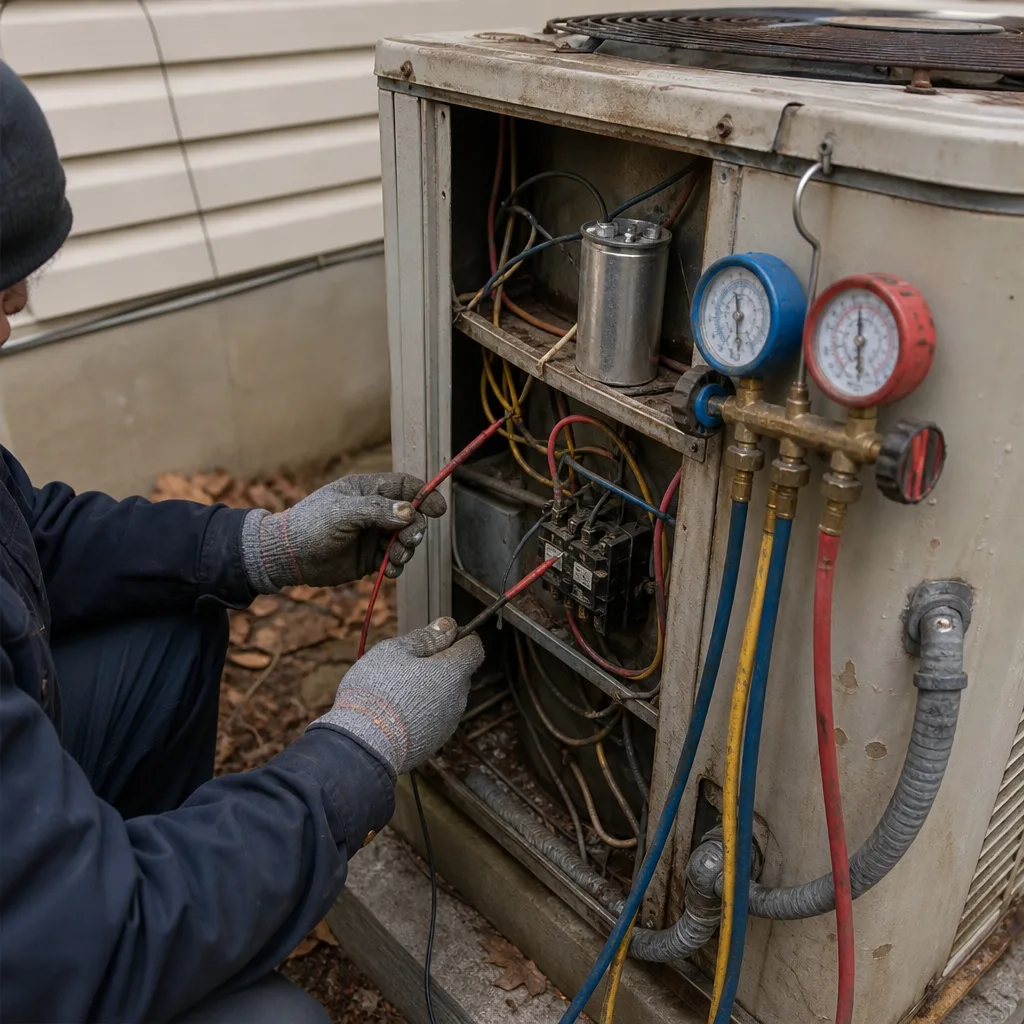
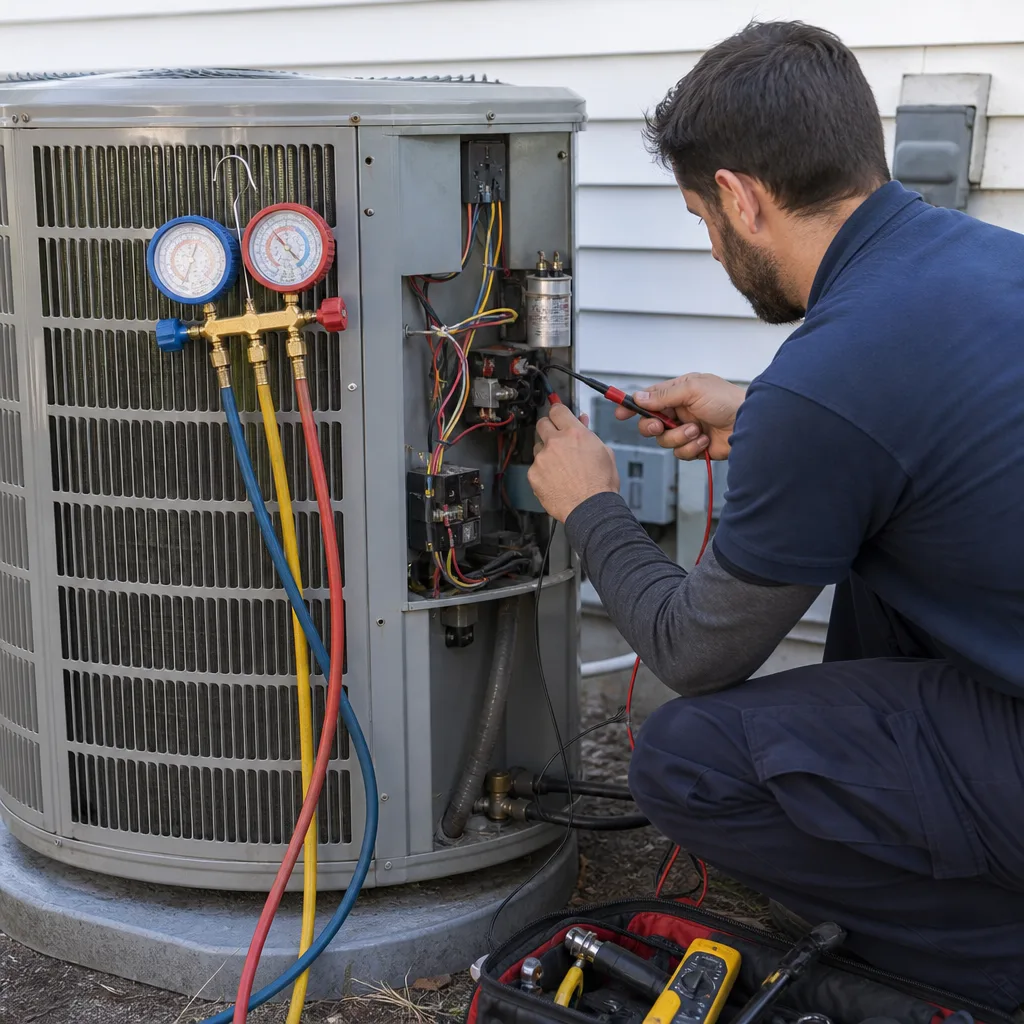
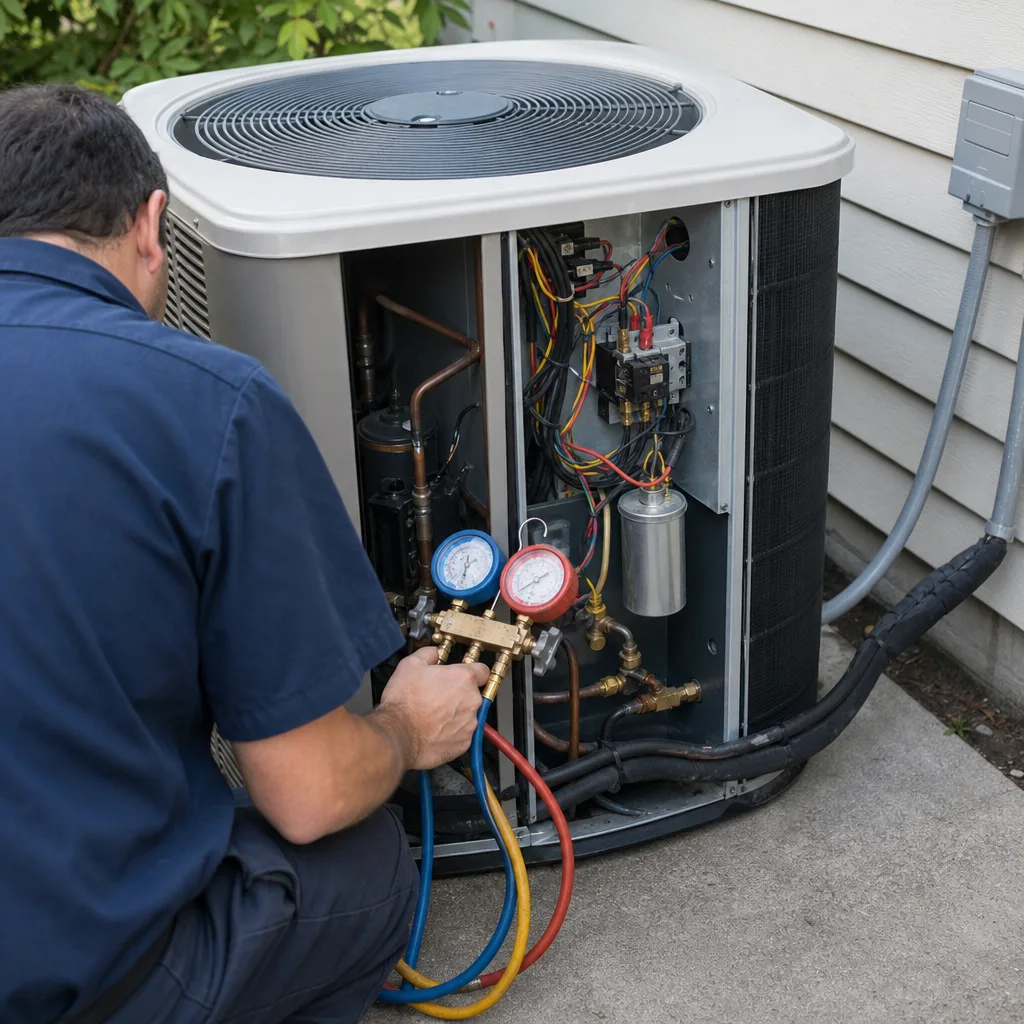
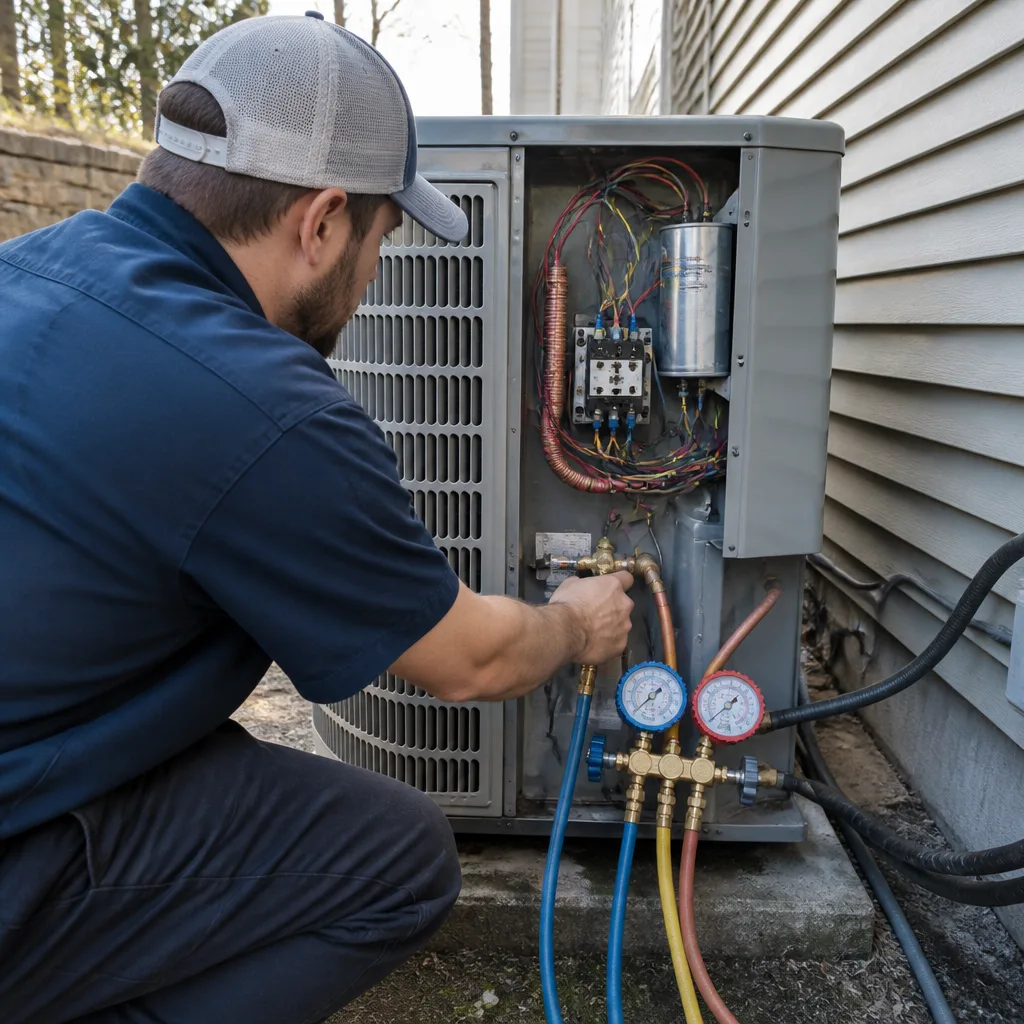
Diagnosis is the hardest part of HVAC, not the repair. In our experience, a system that is not cooling in July in New York can be caused by any of a dozen things: a refrigerant leak, a failed capacitor, a frozen coil from a clogged filter, a bad contactor, a failed compressor, a tripped breaker, or a control board issue. The sequence matters. The tools matter. A professional will use a manifold gauge set, a multimeter, and a systematic process. For a diagnostic call that runs $80 to $150 in New York, you are buying expertise and a definitive answer. The alternative is guessing, replacing parts one by one, and hoping. Guessing costs more than the diagnostic.
For homeowners who want a professional diagnosis without a hard sell, Cold Harbour Heating and Air New York works from set pricing and a written guarantee. Our furnace repair service in New York operates the same way: diagnose first, quote in writing before work begins, and back the repair with our 365-Day Done Right Promise. If the repair fails inside a year, we come back and make it right. No charge. That written guarantee is the difference between a repair that is protected and a repair that is a roll of the dice.
Communicating With a Contractor After You’ve Done Preliminary DIY Work
Here is a scenario we see often in New York: a homeowner changes the filter, clears the drain line, and replaces the thermostat. The system is still not working right. They call us, and they are not sure what to say about the work they have already done. There is a tendency to either downplay it or hide it entirely. Neither is the right approach.
What a technician actually needs to know is simple: what you did, when you did it, and what happened after. That is it. You do not need to apologize. You do not need to overshare. You need to give the technician an accurate starting point so they are not diagnosing from scratch or chasing a problem you already introduced.
Here is a four-step framework we recommend for that conversation:
- Describe the work factually. “I replaced the thermostat last weekend. I matched the wire colors to the old unit. The system came on but now it short-cycles.” That gives the technician a clear lead.
- Describe what changed. “Before the thermostat replacement, it ran constantly without shutting off. After, it cycles every ten minutes.” The delta is more useful than the work itself.
- Disclose anything you opened or disconnected. If you pulled the disconnect at the condenser, say so. If you flushed the drain line, say so. If you are unsure whether the power is fully off, say that too. Technicians work safely when they have accurate information.
- Ask what they recommend, and ask why. You are not a passive customer. You are a homeowner who has done preliminary work and wants to understand the next step. A good technician will explain their reasoning in plain English. We do. Every time.
One note on honesty. If you attempted a repair that opens a refrigerant line or gas connection, disclose it immediately. Not at the end of the visit, not after the technician asks. Immediately. This is a safety issue and a legal issue. The technician needs to know before they put their hands on the system. You will not be reported to anyone by a reputable contractor. You will, however, be able to get the help you need, which is the point of calling.
When you have done preliminary DIY work and you are calling a professional, the value of working with a company that answers the phone with a live person becomes obvious. Cold Harbour Heating and Air New York does not use voicemail trees. A live person answers 24 hours a day, 7 days a week. That matters when you are in the middle of a repair process and you have a question about what to do next.
Questions to Ask Before Hiring Any HVAC Contractor in New York
If you have read this far, you know the legal line, the building rules, and the real cost of mistakes. The remaining question is practical: when you do hire a professional, how do you know you are hiring one who will do it right? Our How to Hire a HVAC Contractor in New York: A Step-by-Step Guide covers this in detail. In New York, where HVAC companies range from excellent to fly-by-night, the answer is in the questions you ask before the technician ever shows up.
Question 1: “Will I get the price in writing before you start work?”
This is the single most important question in New York HVAC. If the company will not commit to a written price before work begins, the price can change at the door. That is the experience that sends homeowners looking for DIY in the first place. Cold Harbour Heating and Air New York provides a written price before any work begins on every job. It is not an upgrade. It is how we have operated since we were founded in 2003, as part of the Kingswell network of independently owned and operated HVAC businesses that all work to the same written standards.
Question 2: “Is the guarantee in writing, and how long does it last?”
A verbal guarantee is not a guarantee. We issue a written guarantee on every repair: the 365-Day Done Right Promise. If the repair fails at any point in that full year, we come back and correct the work at no charge. Not a discounted return visit. Not a pro-rated credit. No charge. On paper, before the technician leaves.
Question 3: “Is your technician trained on my equipment brand?”
New York homes are filled with Carrier, Trane, Lennox, Goodman, Rheem, York, Daikin, Bryant, and American Standard systems. A technician who only works on one or two brands may be learning on your equipment. Our technicians are trained to service all nine major residential brands, including Carrier, Trane, Lennox, and American Standard. The technician who shows up should know the equipment in your home, whatever it is.
Question 4: “Who is actually coming to my home?”
Every Cold Harbour Heating and Air New York technician is background-checked and uniformed. You will know who is walking through your door. That matters in New York, where letting a stranger into your apartment or home requires trust.
Question 5: “What happens if I call at 2 a.m. with a no-heat emergency in January?”
The answer should be that a live person answers. Not a voicemail. Not a callback in the morning. At Cold Harbour Heating and Air New York, a live person answers the phone 24 hours a day, 7 days a week. A no-heat night in a New York winter is not something that can wait until morning, and it should not have to wait for a call center either.
These questions are not optional extras. They are the difference between a contractor who stands behind the work and one who hopes you will not ask. Ask them. Every time. For more guides & resources, visit our blog.
Common Mistakes to Avoid
- Assuming “my building hasn’t complained” means the work is OK. In New York, building management and co-op boards move slowly. A violation or lease enforcement notice may arrive months after the work is done. Get written approval before the work, not after.
- Touching refrigerant lines without EPA certification. The Clean Air Act does not care how handy you are. The fine structure is per day and per violation, and it can exceed the value of your HVAC system many times over.
- Assuming homeowner-permit allowances apply in co-ops and condos. In New York, the ability of a homeowner to do permitted work typically applies to owner-occupied single-family homes, not multi-unit buildings governed by a board or association. The building documents control, and they are usually stricter than the city.
- Diagnosing by symptom alone. A system that is not cooling can be a filter, a capacitor, a refrigerant leak, or a dozen other things. Replacing parts at random is the most expensive way to do DIY HVAC, and it is easy to end up with a larger problem than you started with.
- Skipping the insurance conversation. If your DIY work causes damage, your insurance company will ask who did the work. If the answer is “I did,” and the policy requires licensed professionals, the claim can be denied. Know the answer before you start the work.
- Not disclosing DIY work to the contractor you eventually call. Hiding what you did wastes the technician’s time, and with gas or refrigerant work, it creates a safety risk. Disclose everything. A reputable contractor will appreciate it.
- Choosing a contractor by price alone. In New York, a lowball quote is often a diagnostic fee that becomes an upsell at the door. The right contractor brings a written price, a written guarantee, and a trained technician to the first visit.
See the difference
 Before
 After
After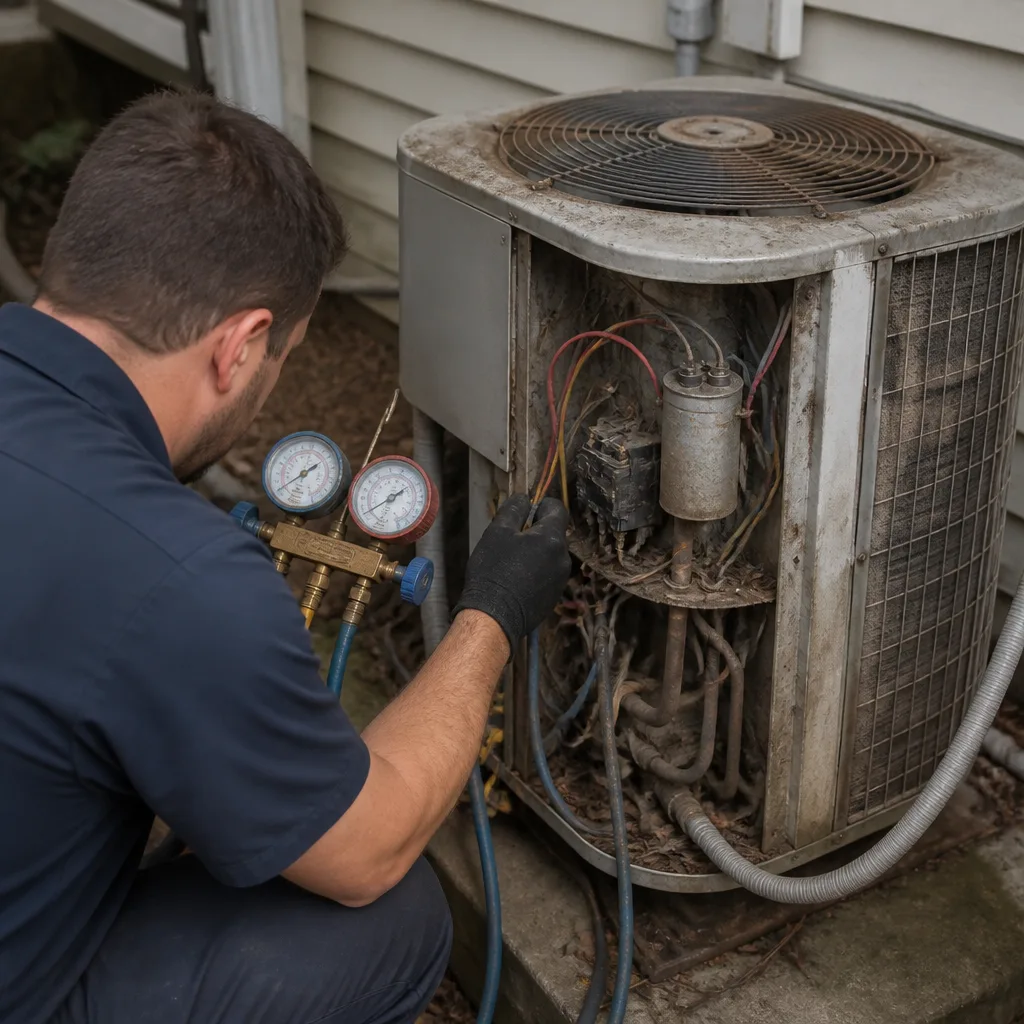 Before
 After
After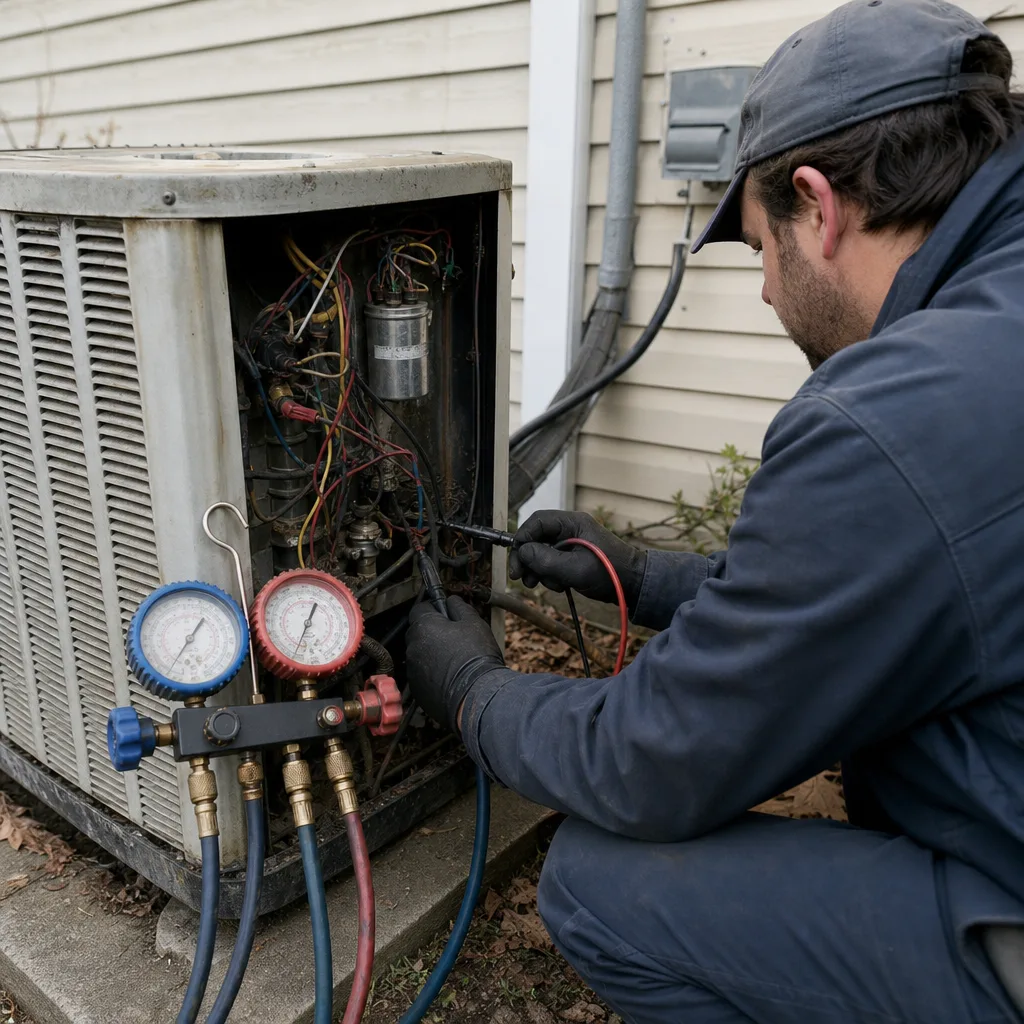 Before
 After
AfterWhen to Call a Professional
Call a professional when the work involves refrigerant, gas, electrical panel connections, or anything governed by your building’s alteration rules. Call when the system is not working and you do not know why. Call when the temperature in your home is a health risk and you cannot afford to guess. Call when you have already done the basic maintenance and the problem persists. For New Yorkers, Cold Harbour Heating and Air New York offers free estimates in New York. Call (934) 465-5501. A live person answers, and you will get a written price before any work begins. For homeowners considering a new system, our AC installation in New York follows the same process: written quote, scheduled installation, and a clean job site.
Frequently Asked Questions
No. Adding or recovering refrigerant requires EPA Section 608 certification under the federal Clean Air Act, and New York State requires registration with the Department of Environmental Conservation. Doing it yourself, even on equipment you own, is a federal violation with fines up to $44,539 per day.
In most cases, yes, but check your lease, co-op proprietary lease, or condo rules first. Many New York buildings restrict window units for aesthetic, safety, or facade reasons, and some landmarked buildings prohibit them entirely. The installation itself must be secure, properly supported, and compliant with any building requirements about projecting from the window.
Yes. Co-op proprietary leases give the board broad authority to regulate alterations to building systems, and many boards maintain an approved contractor list or require board approval before any HVAC work begins. This is separate from city code and is enforceable through the proprietary lease.
In most New York jurisdictions, yes. Furnace replacement involves gas connections, venting, and electrical work, and it is a permitted job that must be performed by a licensed contractor. In New York City, work on gas-fired equipment requires a licensed master plumber or a contractor working under that license.
Attempting to diagnose a system problem by replacing parts one at a time. Homeowners replace a capacitor, then a thermostat, then call us when the system still is not working. The combined cost of the parts and the delay usually exceeds the cost of a professional diagnostic, which would have identified the actual problem immediately.
A homeowner who changes their own filters, cleans their condenser coil twice a year, and keeps the drain line clear can save $300 to $600 a year in New York compared with hiring these tasks out. Those savings do not come with the legal exposure of refrigerant or gas work, which is why we recommend focusing DIY effort there rather than on repairs.
Yes. Our technicians are trained to service Carrier, Trane, Lennox, Goodman, Rheem, York, Daikin, Bryant, and American Standard systems, plus others. If the equipment in your New York home is from a major residential brand, the technician who shows up will know how to work on it.
The Bottom Line
In New York, the DIY-versus-professional HVAC decision is not really about how handy you are. It is about the building you live in, the lease or proprietary lease you signed, the federal and city statutes that govern refrigerant and gas work, and the liability you would carry if something went wrong. The tasks that genuinely save money are the basic maintenance tasks: filters, coils, drain lines, thermostats, and duct sealing on systems you own outright. The tasks that genuinely carry risk are everything else. The legal line is clear if you know where to look, and the cost of crossing it in New York is higher than almost anywhere else in the country. When the work requires a license, a permit, or a board approval, hire a professional who puts the price in writing and stands behind the work. Cold Harbour Heating and Air New York has operated that way in New York since 2003. If you are uncertain which side of the line your project falls on, call us. The advice is free, and the answer is honest. For more on our company, visit our Cold Harbour Heating and Air New York home page.
Written by Victor Mancini, Owner at Cold Harbour Heating and Air New York, serving New York since 2003.